 BUTTER-C
Keratosis pilaris (chicken skin): mechanism and skin care
Tiny bumps on the backs of the upper arms and on the thighs that make the skin feel rough like chicken skin are a very common, benign condition. Understanding the mechanism helps you choose patient, gentle care instead of harsh scrubbing.
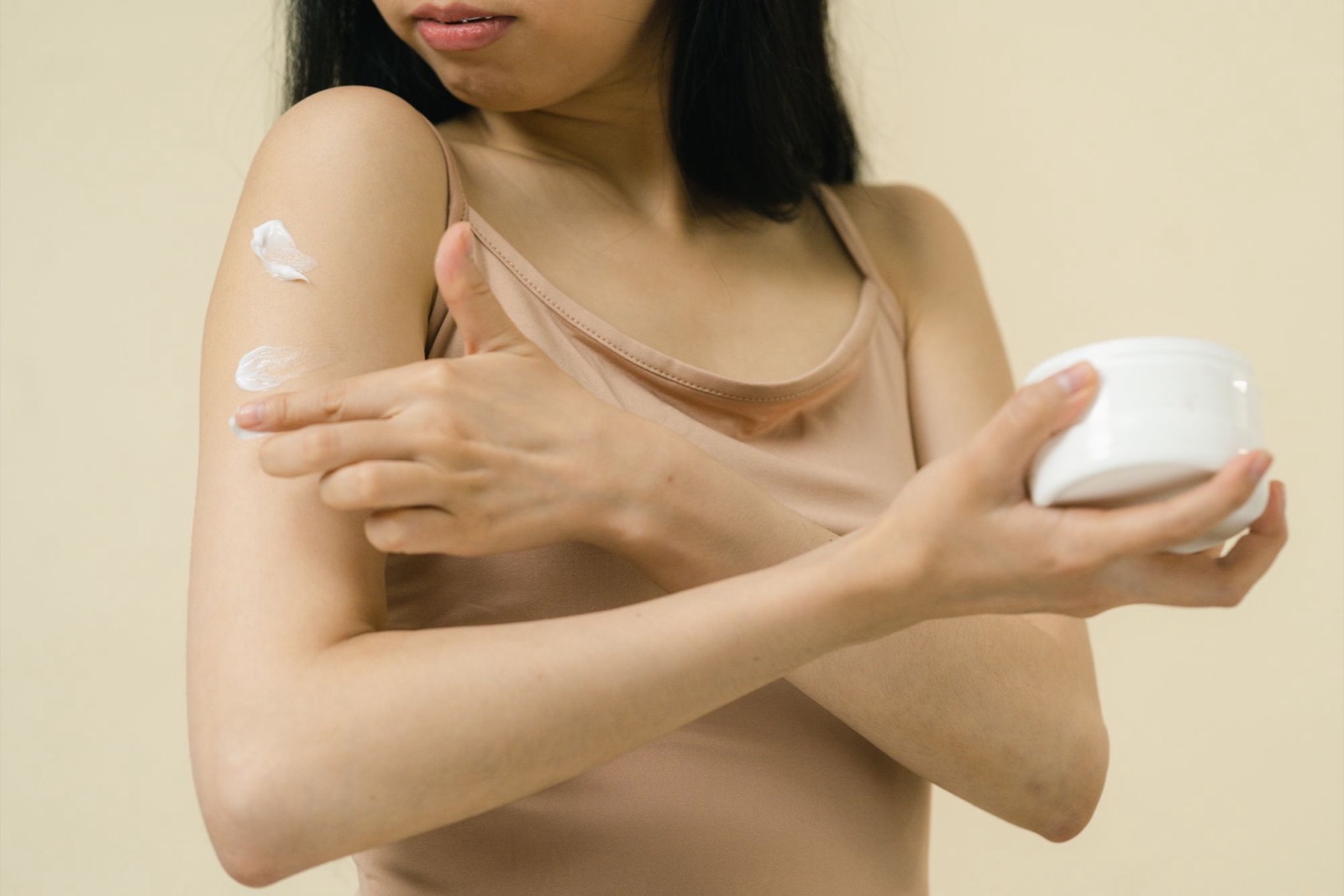
Keratosis pilaris, popularly called “chicken skin”, is a condition in which many small, rough bumps appear on the skin, concentrated on the outer upper arms, thighs and buttocks. It is benign and not contagious, and according to DermNet very common: it is estimated to affect 50–70% of adolescents and about 40% of adults.
Keratosis pilaris is not dangerous, but it affects appearance, especially when wearing short sleeves. This article explains the mechanism, how to recognize it, and the supporting role of cosmetics — mainly moisturizing and gentle exfoliation — in improving how the skin feels and looks.
1. Mechanism: keratin plugs the follicle opening
Normally, the horny cells at the opening of the hair follicle shed regularly. In people with keratosis pilaris, keratinization in the upper part of the follicle is abnormal: keratin builds up and fills the follicle opening instead of shedding, forming “horny plugs” that feel rough to the touch (DermNet).
The cause is not fully understood. The condition tends to run in families and has been linked to changes in the filaggrin gene — filaggrin being an important protein of the skin barrier. Keratosis pilaris also often occurs together with atopic dermatitis and ichthyosis (DermNet). A review by Wang and Orlow (2018) regards it as a primary disorder of the pilosebaceous unit, which may result from inherited mutations or from disrupted biological pathways, including some cases related to certain medicines.
Dry air makes the condition more noticeable: many people find their skin rougher in winter and better in summer (NHS; DermNet). This is why moisturizing plays a central role in care.
2. Recognizing keratosis pilaris
- Location: most commonly the outer upper arms and thighs; it can also appear on the buttocks, trunk and face.
- Appearance: small bumps that may be skin-colored, pinkish-red on light skin or dark brown on darker skin; sometimes with a red halo around the bump.
- Feel: dry skin, rough like sandpaper; usually not painful, sometimes slightly itchy.
- Course: usually begins in childhood, becomes more noticeable at puberty, lasts for many years and may fade in adulthood.
Conditions that can be mistaken for chicken skin include atopic dermatitis, folliculitis and milia (DermNet). The table below helps with a preliminary distinction; a definitive diagnosis is the role of a dermatologist.
| Condition | Suggestive features | Common areas |
|---|---|---|
| Keratosis pilaris | Small, uniform bumps, rough to the touch, rarely painful, lasting many years, worse in dry weather | Outer upper arms, thighs, buttocks |
| Folliculitis | Red bumps around hairs, often with pus at the tip, may be painful or itchy, appear relatively suddenly | Any hair-bearing area: back, chest, buttocks, legs, shaved areas |
| Milia | Small keratin-containing cysts: tiny pearly-white bumps just under the surface of the skin (DermNet) | Most often on the face, particularly the eyelids and cheeks |
If bumps on your back or chest have pus, itch or hurt, also read the article on folliculitis and back acne.
3. Moisturizing: the foundation of care
The NHS guidance puts moisturizing at the top of its list of things to do. The aim is to replenish water and lipids in the stratum corneum and soften the surface so that the horny plugs shed naturally more easily.
- Creams or lotions containing urea, lactic acid, salicylic acid or AHAs: DermNet notes that these ingredients either moisturize or help loosen the scale stuck in the follicles.
- Apply after bathing and whenever the skin feels dry and tight.
- Consistently every day: results come from persistence; when you stop moisturizing, the skin usually becomes rough again.
- Prefer fragrance-free products if your skin is easily irritated or you also have atopic dermatitis.
Body lotions can be formulated with humectants and emollients suited to large areas of skin such as the arms and legs. General information on dry skin is in the article on dry skin and dehydrated skin.
4. Exfoliation: gentle, no harsh scrubbing
In a systematic review by Beyron (2025), lactic acid and glycolic acid were widely used topical agents and showed effectiveness in improving the condition. A review by Maghfour et al. (2022) also found that topical products helped improve the appearance of chicken skin, although study quality and outcome measures varied between studies.
Chemical exfoliation
AHAs (lactic acid, glycolic acid) and BHA (salicylic acid) help loosen the bonds between horny cells. They can be used in the form of body lotions or body washes containing these acids. When starting out, use them every other day, increase gradually if your skin tolerates them well, and always moisturize afterwards. Mild, transient stinging may occur; persistent burning or spreading redness is a sign to stop.
Physical exfoliation
The NHS suggests rubbing gently with a washcloth or an exfoliating glove; DermNet mentions an exfoliating sponge in the shower or bath. What matters is being gentle: the NHS advises against harsh, gritty exfoliating products because they can make the condition worse. Consider body scrubs with fine particles combined with emollients.
5. Daily bathing habits
The following checklist is compiled from NHS recommendations:
- Bathe in cool or lukewarm water; avoid hot baths and showers.
- Use mild, fragrance-free soaps or body washes; avoid strongly scented products that can dry the skin.
- Do not scratch, squeeze or pick at the bumps.
- Rub gently with a soft cloth or exfoliating glove; do not use coarse scrubs.
- Apply moisturizer right after patting dry.
- Persist for a few weeks before judging any change.
6. Limits of cosmetics and when to see a doctor
There is currently no way to make keratosis pilaris disappear completely; many people improve gradually with age (DermNet). Cosmetics make the skin softer and smoother and reduce roughness when used consistently, but they do not change a person’s underlying constitution.
Methods such as laser, intense pulsed light or prescription topical medicines have been studied for certain cases (Maghfour et al., 2022; Beyron, 2025), and they need to be assessed and prescribed by a dermatologist. See a doctor when:
- The skin is very itchy, inflamed and red, or has pus.
- Home care measures do not help and the condition bothers you.
- You are not sure whether the bumps are keratosis pilaris, especially in young children.
- It appears on the face with redness, loss of eyebrow hair or pitted skin.
7. A formulation perspective
Products for chicken skin usually have to balance two opposing requirements: enough keratin-softening actives, yet gentle enough for daily use over large areas. When developing body care formulas for clients, Butter-C’s formulation team pays attention to pH, the accompanying moisturizing base and the after-feel, and recommends that brand owners describe the benefit at the level of “helps soften and smooth the skin”.
Frequently asked questions
Is keratosis pilaris contagious?
No. It is caused by keratin building up in the hair follicles and has a hereditary component; it is not caused by microorganisms and does not spread through contact.
Does scrubbing really hard make skin smoother faster?
It is not advisable. Harsh scrubbing easily irritates the skin and makes it redder. Gentle exfoliation combined with regular moisturizing is more suitable.
How long before the skin feels smoother?
It usually takes a few weeks of consistent use to see a clear change. When you stop caring for it, the skin may become rough again, so this is a long-term habit.
References
- DermNet. Keratosis Pilaris: Symptoms, Causes, and Treatment. https://dermnetnz.org/topics/keratosis-pilaris
- DermNet. Milium, milia. https://dermnetnz.org/topics/milium
- NHS. Keratosis pilaris. https://www.nhs.uk/conditions/keratosis-pilaris/
- Wang JF, Orlow SJ. Keratosis Pilaris and its Subtypes: Associations, New Molecular and Pharmacologic Etiologies, and Therapeutic Options. Am J Clin Dermatol. 2018. PMID 30043128.
- Maghfour J, et al. Treatment of keratosis pilaris and its variants: a systematic review. J Dermatolog Treat. 2022. PMID 32886029.
- Beyron A. Keratosis pilaris: a systematic review of the literature and strategies for optimal treatment. Eur J Dermatol. 2025. PMID 41277649.