 BUTTER-C
Rosacea: signs, triggers and skin care
Facial flushing in the sun, with hot drinks or under stress, and then red patches on both cheeks that simply stay — this may be rosacea, a chronic skin condition that needs a doctor's diagnosis and very gentle skin care.
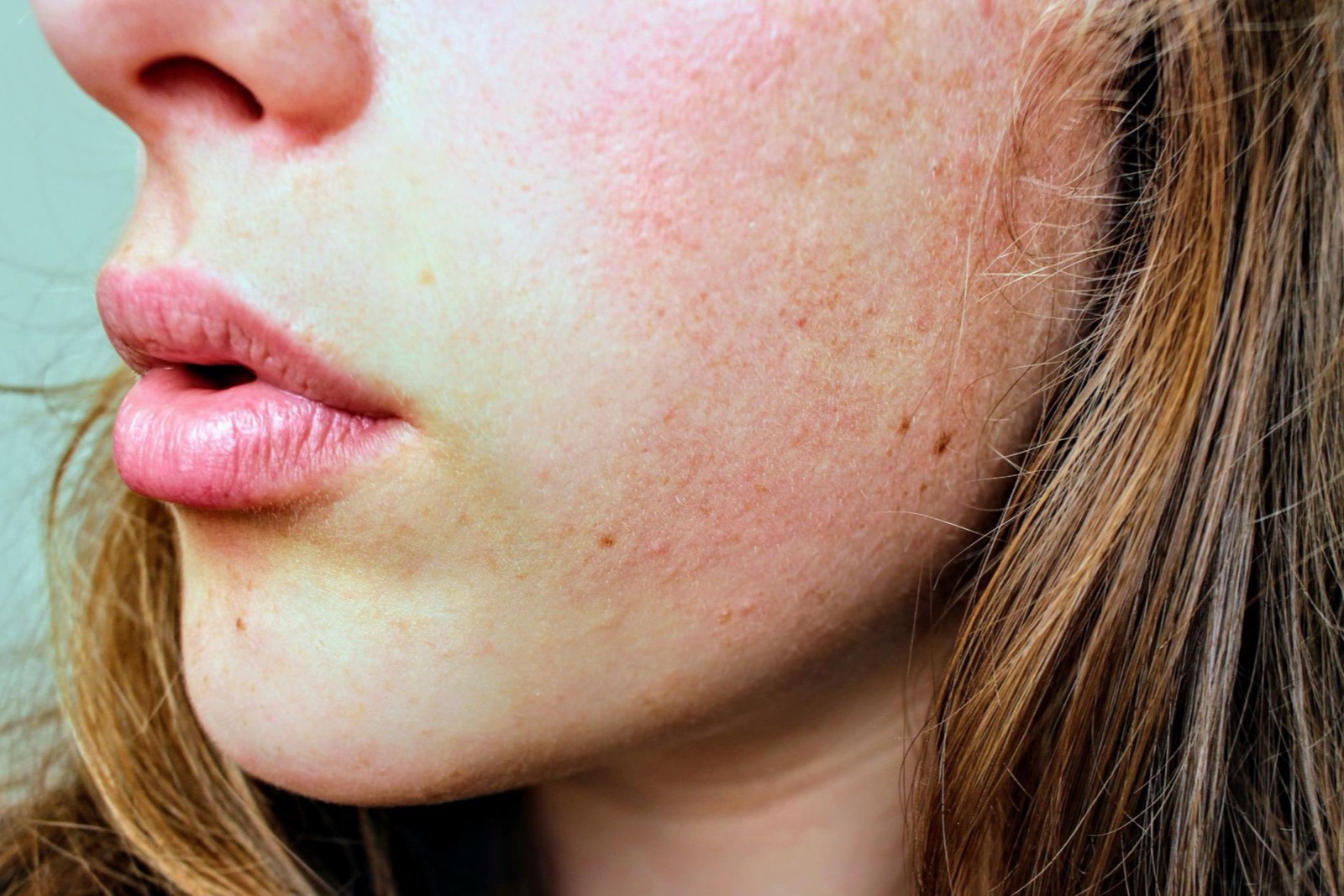
Rosacea, often referred to simply as facial redness, is a chronic inflammatory skin disease of the face (Two et al., 2015). Common signs include episodes of transient flushing or persistent redness, small dilated blood vessels, papules and pustules. Because at first glance it is easily mistaken for acne, sensitive skin or irritation from cosmetics, many people handle it on their own in the wrong way and make their skin more uncomfortable.
This article helps you recognize rosacea, understand its triggers and learn the principles of gentle skin care — the part where cosmetics can play a supporting role. Diagnosis and the choice of medical interventions are matters for a dermatologist.
1. What is rosacea
The exact mechanism of rosacea is not yet fully known. Two et al. (2015) summarize three groups of mechanisms that may contribute: dysregulation of the innate immune system, overgrowth of certain microorganisms that normally live on the skin, and abnormal neurovascular signaling. DermNet adds genetic factors and signs of an impaired skin barrier in the affected skin.
According to DermNet, rosacea is diagnosed more often in people with fair skin, but in people with skin of color its signs are harder to recognize, so it may be missed. Eye involvement — dryness, a gritty feeling, sensitivity to light, inflammation of the eyelid margins — occurs in more than half of patients.
2. From “four subtypes” to recognition by phenotype
Rosacea used to be divided into four subtypes: erythematotelangiectatic, papulopustular, phymatous (thickened skin, tissue overgrowth) and ocular (Two et al., 2015). However, one person can have features of several subtypes at the same time. For this reason, the US National Rosacea Society (Gallo et al., 2018) and the global ROSCO consensus panel (Tan et al., 2017) have moved to a phenotype-based approach — describing each specific feature that the patient has.
| Feature | Description | Role in diagnosis (ROSCO) |
|---|---|---|
| Persistent centrofacial redness | Redness on the cheeks, nose, chin and forehead, at times intensifying in episodes | Sufficient to suggest the diagnosis |
| Phymatous changes (tissue overgrowth) | Thickening of the skin, usually on the nose | Sufficient to suggest the diagnosis |
| Transient flushing | Episodes of facial heat and redness on exposure to triggers | Not sufficient on its own |
| Small dilated blood vessels | Visible red vessel lines on the skin | Not sufficient on its own |
| Papules, pustules | Small red bumps, possibly containing pus | Not sufficient on its own |
| Eye involvement | Dryness, gritty feeling, red eyes, inflammation of the eyelid margins | Not sufficient on its own |
The table above helps explain how doctors assess rosacea; it is not for self-diagnosis. Each phenotype has its own management approach, so an examination to identify the exact features is of practical value.
3. Common triggers
DermNet lists factors that can make rosacea worse: UV radiation, temperature changes, strenuous exercise, spicy food, alcohol, psychological stress, air pollution and tobacco smoke. Among these, UV radiation is considered the most important environmental factor. The American Academy of Dermatology (AAD) also notes that sunlight is one of the common causes of flare-ups, in all skin colors and in every season.
Triggers differ from person to person. A practical approach is to keep a diary: each time your face turns red, write down your activity, what you ate and drank, the weather and any product you had just used; after a few weeks a pattern will emerge so that you can avoid triggers proactively.
4. Gentle skin care for people with rosacea
People with rosacea are often more sensitive to certain components of topical products, so they need guidance on choosing cleansers, moisturizers and sunscreens with a focus on protecting the barrier and limiting irritation (Del Rosso, 2005). The AAD offers specific suggestions:
Ingredients to avoid (according to the AAD)
- Alcohol, camphor, menthol. (Note from this article, not from the AAD: the AAD simply says “alcohol”; here it is understood as volatile alcohol such as ethanol, as distinct from fatty alcohols used as emollients.)
- Fragrance — choose “fragrance-free” products rather than “unscented” ones, because “unscented” products may still contain masking fragrances.
- Glycolic acid, lactic acid, urea.
- Sodium lauryl sulfate (often found in shampoos and toothpastes).
Daily care checklist
- Wash your face twice a day with a gentle cleanser (not soap), applying it with your fingertips, rinsing with warm water and patting dry with a clean cotton towel.
- Wait until the skin is completely dry before applying moisturizer, to reduce stinging.
- Moisturize after cleansing, whether your skin is dry or oily; if you are using a topical medicine prescribed by a doctor for rosacea, the AAD advises applying the medicine first and then the moisturizer; if your doctor gives you specific instructions, follow them.
- Choose creams over lotions or gels; never use an astringent or toner.
- Do not scrub, and do not use a washcloth or sponge to wash; if you are exfoliating, stop.
- Test new products and makeup before using them on your face.
The AAD cites one small study: patients used a topical medicine prescribed by a doctor on the face and also applied a gentle, non-irritating moisturizer to one side of the face; after 15 days, the moisturized side was less dry, flaky and rough and felt more comfortable. The AAD says other studies have found similar results. For the principles of the skin barrier, see the article the skin barrier; for choosing products when your skin often stings, see the article sensitive skin.
5. Year-round sun protection
Because sunlight is a common trigger, the AAD recommends:
- Seek shade when possible; wear a wide-brimmed hat, UV-protective sunglasses and protective clothing.
- Use a broad-spectrum, SPF 30 or higher, water-resistant sunscreen on all skin not covered by clothing — even on cloudy days.
- If a sunscreen causes discomfort, consider one with mineral filters (zinc oxide, titanium dioxide), with silicone (such as dimethicone) and without fragrance.
Mineral filters sometimes leave a white cast; the AAD suggests choosing micronized or tinted formulas. The meaning of SPF is explained in the article SPF and sunscreen testing (in Vietnamese).
6. When to see a dermatologist
- Facial redness lasting several weeks, or flushing that becomes more and more frequent.
- Papules and pustules appear, and ordinary acne products make the skin more uncomfortable.
- The skin of the nose or other areas becomes thicker and bumpy.
- Dry, gritty, red eyes or sensitivity to light — an additional examination by an eye specialist is needed, because eye involvement can affect vision if left untended for a long time (DermNet).
- Facial redness and papules after a period of using “mixed creams” or topical medicines of unknown origin on your own.
The doctor will assess the phenotype and choose appropriate interventions — prescription medicines or procedures such as laser or light therapy. Rosacea is a chronic condition; the goal is to control symptoms and reduce the number of flare-ups. If you are unsure whether it is rosacea or acne, see also the article caring for acne-prone skin and let a doctor tell the two apart.
7. A formulation perspective
When developing products for redness-prone skin, Butter-C's formulation team uses the AAD's list of ingredients to avoid as a checklist: no fragrance, limited volatile alcohol and exfoliating acids, gentle cleansing systems, and a preference for mineral filters in sunscreens. Claims are made at the level of helping to soothe discomfort and supporting moisturization.
Frequently asked questions
Is rosacea adult acne?
No. Both conditions can involve papules and pustules, but their mechanisms differ, and many acne products can make skin with rosacea more uncomfortable. A dermatologist will tell them apart.
Can people with rosacea wear makeup?
They can. The AAD suggests that a green-tinted concealer helps cover redness, and that water-based or powder makeup is usually less irritating. You should still test it on a small area first and remove makeup gently.
Is rosacea contagious?
No. Rosacea is not an infectious disease and does not spread through contact.
References
- Two AM et al. Rosacea: part I. Introduction, categorization, histology, pathogenesis, and risk factors. J Am Acad Dermatol. 2015. PMID 25890455.
- Gallo RL et al. Standard classification and pathophysiology of rosacea: The 2017 update by the National Rosacea Society Expert Committee. J Am Acad Dermatol. 2018. PMID 29089180.
- Tan J et al. Updating the diagnosis, classification and assessment of rosacea: recommendations from the global ROSacea COnsensus (ROSCO) panel. Br J Dermatol. 2017. PMID 27718519.
- Del Rosso JQ. Adjunctive skin care in the management of rosacea: cleansers, moisturizers, and photoprotectants. Cutis. 2005. PMID 15810806.
- American Academy of Dermatology. 7 rosacea skin care tips dermatologists recommend. https://www.aad.org/public/diseases/rosacea/triggers/tips
- DermNet. Rosacea: Symptoms, Causes, and Management. https://dermnetnz.org/topics/rosacea