 BUTTER-C
Atopic dermatitis: basics, daily moisturizing, seeing a doctor
Atopic dermatitis often lasts for years, with calm periods and flare-ups. Medicines are the doctor’s job, while daily skin care — gentle cleansing and regular moisturizing — is the part that patients and their families can take charge of.
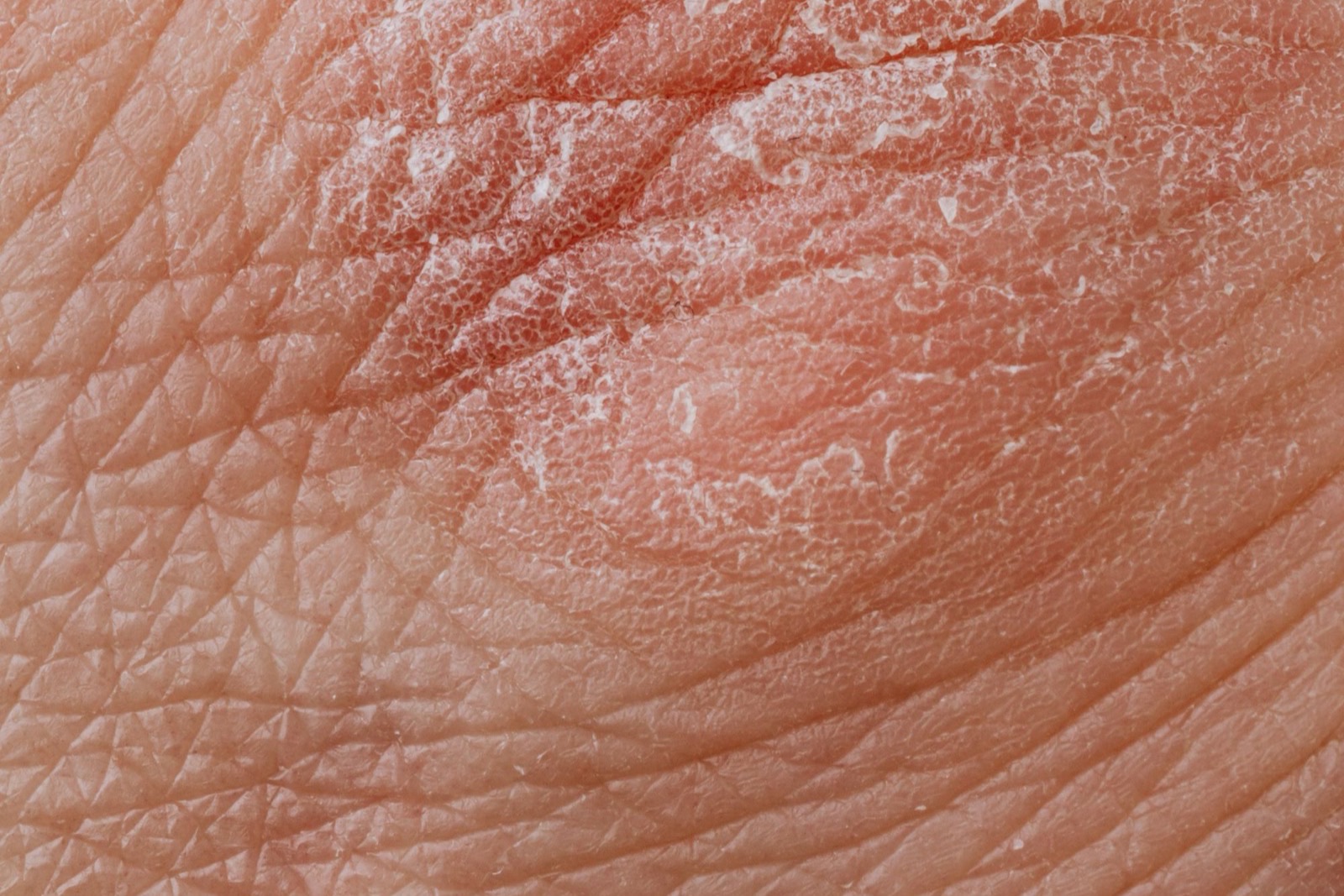
Atopic dermatitis, also called atopic eczema, is a chronic inflammatory skin disease characterized by intense itching and recurrent eczematous lesions (Weidinger and Novak, 2016). It usually begins in childhood but is also common in adults. According to guidelines from the American Academy of Dermatology, atopic dermatitis affects up to 25% of children and 2–3% of adults (Eichenfield et al., 2014).
This is a medical condition that a dermatologist needs to diagnose and monitor. This article does not replace medical advice; its aim is to help readers understand the mechanism, recognize aggravating factors and understand the supporting role of daily skin care, especially moisturizing.
1. Recognizing atopic dermatitis
According to the NHS (the UK National Health Service), atopic dermatitis can make the skin:
- itchy;
- dry, cracked, scaly, flaky or thickened;
- discolored — red, purple, gray, or lighter or darker than the surrounding skin, depending on skin color;
- blister or bleed.
Common sites are the elbows, knees and hands; in babies and young children it is also common on the face. The disease comes in episodes: at times the symptoms get worse (flare-ups), at times they calm down. Atopic dermatitis is not contagious. People whose parents have atopic eczema, or who themselves have, or whose relatives have, asthma or allergic rhinitis, are at higher risk (NHS).
Diagnosis is based on a clinical examination and medical history taken by a doctor (Eichenfield et al., 2014). Many other skin conditions — contact dermatitis, fungal skin infection, psoriasis — can look similar, so you should not diagnose yourself.
2. Why atopic skin dries out and itches easily
Atopic dermatitis used to be regarded mainly as an immune disorder. Experts now see it as a lifelong disposition with variable manifestations, in which defects in the epidermal barrier play a central role (Weidinger and Novak, 2016).
A key milestone was the discovery that loss-of-function variants of the gene encoding filaggrin — a protein needed to form the skin barrier — are a very strong predisposing factor for atopic dermatitis (Palmer et al., 2006). Filaggrin breakdown products are part of the natural moisturizing factor, which helps keep the epidermis hydrated and maintain barrier function (Eichenfield et al., 2014); a filaggrin deficiency can therefore make the skin more prone to dryness. A weak barrier lets allergens and irritants penetrate and trigger an inflammatory response; itching leads to scratching, and scratching damages the barrier further. The structure of the skin barrier is described in our article on the skin barrier.
Weidinger and Novak (2016) also note that atopic dermatitis increases the risk of food allergy, asthma and allergic rhinitis, and has a considerable psychological impact on both patients and their families.
3. Factors that can trigger flare-ups
| Group | Examples (according to the NHS) | Everyday suggestions |
|---|---|---|
| Irritants | Soap, laundry detergent, some fabrics | Wash and bathe with a gentle cleanser or a moisturizing product used for washing |
| Allergens | Pet hair, pollen, house dust mites, certain foods | Change your diet only when a doctor advises it |
| Temperature | Heat, sudden changes in temperature | Keep the body cool and avoid overheating |
| Skin infections | For example, staph infection | See a doctor if there are signs of infection (section 6) |
| Other factors | Stress, hormonal changes (for example during pregnancy) | Monitor flare-ups and keep a diary of them |
Each person has their own set of triggers. Recording when flare-ups happen, together with the products, weather, foods and events involved, helps the doctor and the patient recognize patterns.
4. Moisturizing — the foundation of daily skin care
The Cochrane review by van Zuuren et al. (2017) analyzed 77 randomized controlled trials of moisturizers for eczema. The authors concluded that most moisturizers showed some benefits: they gave better results when used together with the regimen prescribed by a doctor, prolonged the time to the next flare-up, reduced the number of flare-ups and reduced the amount of prescription topical medicines needed. The review found no reliable evidence that one moisturizer is better than another. The 2023 guidelines of the American Academy of Dermatology also make a strong recommendation for the use of moisturizers in adults with atopic dermatitis (Sidbury et al., 2023).
In other words, moisturizing is the foundation; it does not replace medicines when a doctor prescribes them, and the right product is one that the patient finds comfortable and can use consistently.
Moisturizing checklist based on NHS recommendations
- Apply moisturizer often, at least 2 times a day, and keep going even after the skin has improved.
- Use a moisturizing product to wash instead of soap.
- Do not dip your fingers directly into the jar; use a clean spoon or choose a pump dispenser.
- Do not share moisturizers with other people.
- Keep fingernails short; young children can wear anti-scratch mittens.
- When the skin itches, rub it gently with your fingers instead of scratching.
- Safety note: moisturizers do not catch fire while they are on the skin, but when they soak into clothing, bedding or dressings, these fabrics catch fire more easily — keep away from naked flames and cigarettes.
For young children, choose fragrance-free products with a texture rich enough for dry skin, and ask a pediatrician or dermatologist before use.
5. Bathing and daily habits
- Bathe in moderately warm water for a short time with a gentle cleanser; pat the skin dry gently and apply moisturizer right away.
- Keep the bedroom cool and well ventilated; wear soft clothing and avoid fabrics that have bothered your skin before.
- Wash clothes with a mild detergent and rinse them thoroughly.
- Protect your skin from the sun with clothing and a gentle sunscreen when going outdoors; test a new product on a small area of skin first.
People with atopic skin often also have skin that is sensitive to cosmetics; principles for choosing products are covered in our article on sensitive skin.
6. When to see a dermatologist
The NHS advises seeing a doctor if you have symptoms of atopic dermatitis, or if the measures you are using do not help control it. Seek care promptly if the skin affected by eczema:
- has blisters, crusts, oozing or pustules;
- is painful, swollen or hot;
- suddenly gets worse or spreads;
- comes with a fever or a feeling of being generally unwell.
These may be signs of infection or a serious complication that needs medical intervention. Prescription medicines — topical or systemic — are used only as prescribed and monitored by a doctor; patients should not buy them, prolong them or stop them on their own. Cosmetics, including products labeled “for atopic skin,” play only a supporting role in skin care.
7. Formulation perspective
For moisturizers aimed at dry skin and atopic skin, the Butter-C formulation team favors fragrance-free formulas, a short ingredient list, a texture with enough capacity to hold in moisture and packaging that limits contamination, such as pump dispensers or tubes. The preservative system still needs to pass a challenge test according to the standard (see our article on ISO 11930 preservative challenge testing (in Vietnamese)), because damaged skin needs microbiologically clean products all the more. One example of a related product line is baby moisturizer.
Frequently asked questions
Does atopic dermatitis go away on its own with age?
According to the NHS, symptoms tend to become milder with age, but this is a chronic condition and can persist or come back. The goal is good control of symptoms and longer stable periods.
Can a moisturizer replace medicine prescribed by a doctor?
No. Moisturizing is a supporting foundation and helps reduce the number of flare-ups, but during a flare-up, medicines must be used as prescribed by a doctor.
Should I cut out many foods to make my skin better?
Do not restrict your diet on your own. The NHS advises changing your diet only when a doctor asks you to, including for mothers who are breastfeeding.
References
- Weidinger S et al. Atopic dermatitis. Lancet. 2016. PMID 26377142.
- Eichenfield LF et al. Guidelines of care for the management of atopic dermatitis: section 1. Diagnosis and assessment of atopic dermatitis. J Am Acad Dermatol. 2014. PMID 24290431.
- Palmer CN et al. Common loss-of-function variants of the epidermal barrier protein filaggrin are a major predisposing factor for atopic dermatitis. Nat Genet. 2006. PMID 16550169.
- van Zuuren EJ et al. Emollients and moisturisers for eczema. Cochrane Database Syst Rev. 2017. PMID 28166390.
- Sidbury R et al. Guidelines of care for the management of atopic dermatitis in adults with topical therapies. J Am Acad Dermatol. 2023. PMID 36641009.
- NHS. Atopic eczema. https://www.nhs.uk/conditions/atopic-eczema/