 BUTTER-C
Hives: recognition, emergency signs and gentle skin care
Hives are itchy wheals that appear suddenly; each individual welt usually fades within 24 hours. Most episodes of hives clear up on their own, but swelling of the lips, tongue or throat, or difficulty breathing, is a sign to call emergency services right away.
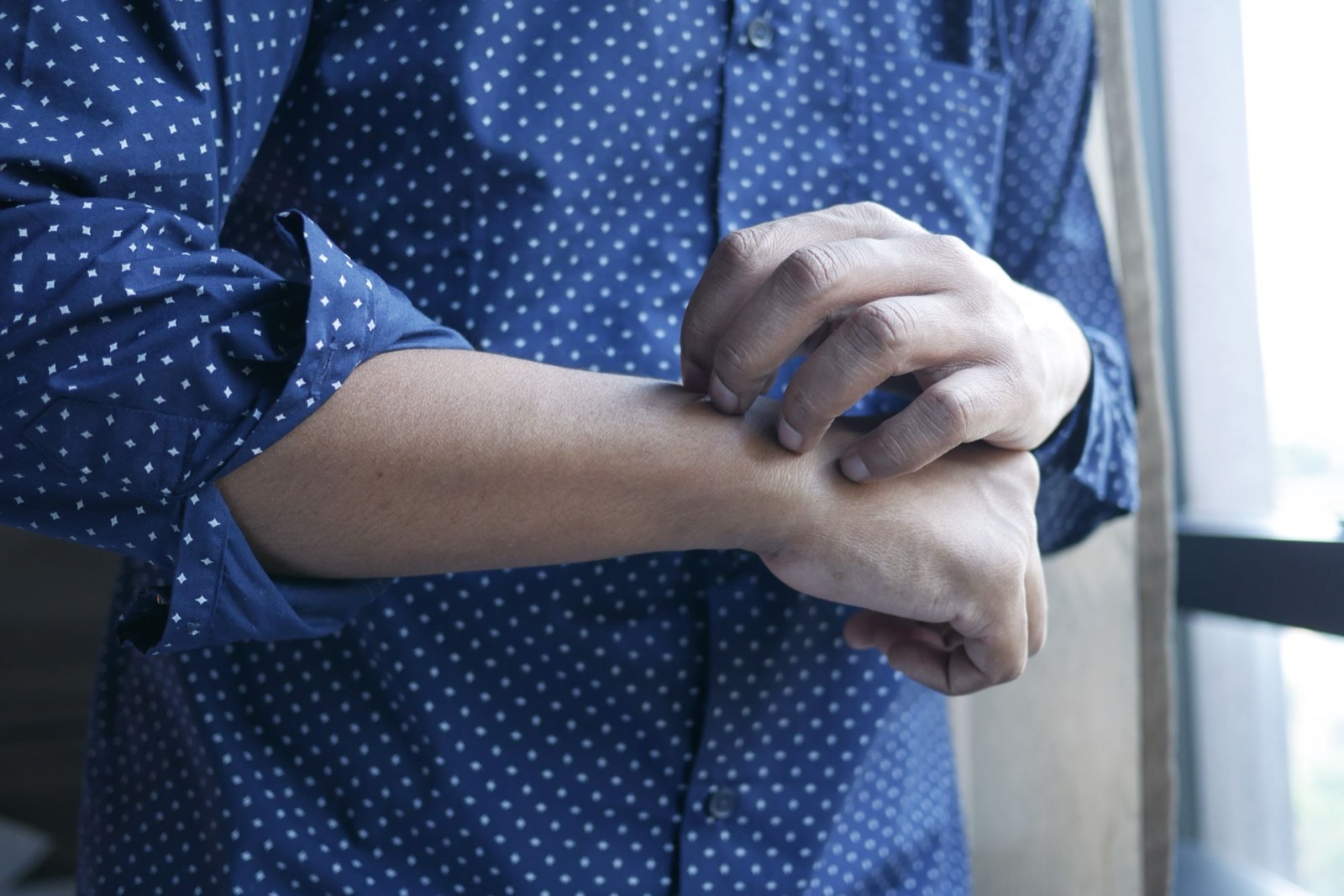
Hives (also called urticaria) is a condition in which the skin suddenly breaks out in wheals or raised patches, which are usually very itchy. According to the international EAACI, GA²LEN, EuroGuiDerm and APAAACI guideline, urticaria is a common, mast cell–driven disease that presents with wheals, angioedema or both; about 20% of people have acute urticaria at least once in their lifetime (Zuberbier et al., 2022).
This article is based mainly on the UK National Health Service (NHS) and the American Academy of Dermatology (AAD). Finding the cause is the doctor’s job; medicines require advice from a doctor or pharmacist.
1. What hives look like
According to the NHS, a hives rash consists of raised bumps or patches in many shapes and sizes; it may be in one area or spread across the body, and it can itch, sting or burn. On white skin the rash looks pink or red; on brown or black skin the color of the rash is harder to see. The welts can grow larger or join together (AAD).
A helpful identifying feature: each individual welt usually disappears within 24 hours, but new welts can appear elsewhere. For most people, an episode of hives lasts from a few days to a few weeks (AAD). Hives appear when a trigger causes the skin to release large amounts of histamine and other mediators (NHS).
2. Acute and chronic hives
| Feature | Acute hives | Chronic hives |
|---|---|---|
| Duration | Less than 6 weeks | 6 weeks or longer (AAD) |
| Course | Most clear up on their own within a few days to a few weeks (AAD) | Keep coming back for 6 weeks or longer; a dermatologist can help control them (AAD) |
| Cause | May be due to allergy (foods, insects, medicines), infection or physical stimuli; in many cases no cause is found (AAD) | Spontaneous type: usually no cause is found; inducible type: caused by a specific physical stimulus (AAD) |
Inducible hives appear whenever the skin meets a stimulus such as pressure, sunlight or cold. The most common form is dermatographism: itchy, swollen streaks appear where the skin has been scratched or rubbed, and these streaks usually go away after a few minutes. Spontaneous hives is the term used when no cause is found (AAD). Chronic hives reduce quality of life and affect study and work (Zuberbier et al., 2022).
3. Common triggers
The NHS lists: certain foods; contact with plants, animals, chemicals or latex; cold; hot, sweaty skin from exercise, stress or eating spicy food; medicines; insect bites or stings; scratching or pressing on the skin, including tight clothing; infections; problems with the immune system; and, more rarely, water or sunlight.
Checklist: keep a diary when hives last a long time or keep coming back (based on AAD)
- The date and time the hives started and what you were doing beforehand.
- Foods, drinks and medicines you had just taken, including over-the-counter pain relievers.
- Whether you had just been hot, sweating a lot, stressed or ill.
- The clothes you were wearing and the items you were carrying.
Also write down the names and ingredient lists of any new products used on your skin (section 7); bring the diary with you to your appointment.
4. Angioedema and signs that need an emergency call
Some people with hives also have deeper swelling under the skin, called angioedema (AAD). Angioedema often affects the face (especially the lips, tongue and eyelids), the hands, the feet and the genitals, and it can be very dangerous if swelling of the throat makes breathing difficult (NHS).
Call emergency services immediately (115 is the emergency number in Vietnam) if any of the following signs appear (NHS):
- the lips, mouth, throat or tongue suddenly swell;
- breathing very fast, difficulty breathing, wheezing, or a choking feeling;
- the throat feels tight or it is hard to swallow;
- the skin, tongue or lips turn blue, gray or pale (on brown or black skin, this is easier to see on the palms of the hands and the soles of the feet);
- sudden confusion, drowsiness or dizziness, or fainting and not being able to be woken up;
- a young child is limp, floppy or not responding as they normally do.
According to the NHS, these may be signs of a serious allergic reaction (anaphylaxis), which needs emergency care in hospital; the person should not drive themselves to the emergency department. The AAD adds two signs: feeling as if you are about to faint, and a racing heart.
Angioedema is not always caused by allergy: there is a type caused by medicines, most commonly ACE inhibitors, and a rare hereditary type (NHS). Do not stop any medicine you are taking on your own; ask the doctor who prescribed it. Swelling that keeps coming back needs to be assessed by a doctor.
5. When to see a doctor and the role of medicines
The NHS advises seeing a doctor promptly if hives do not improve after 2 days, the rash is spreading, hives keep coming back, there is also a high fever and tiredness, there is swelling under the skin, or parents are worried about their child’s hives. Hives that last 6 weeks or longer should be examined by a dermatologist (AAD).
Medicines to relieve symptoms require advice from a doctor or pharmacist; people with a long-term condition should tell the pharmacist, and some medicines may not be suitable for young children (NHS).
6. Gentle skin care during a hives outbreak
AAD suggestions while waiting for hives to fade:
- Cool compresses: soak a clean washcloth in cold water, wring it out and place it on the itchy area for 10–20 minutes.
- Anti-itch cream or lotion: use exactly as directed on the label; if a doctor has prescribed a topical medicine, use that medicine.
- A colloidal oatmeal bath in lukewarm water, for the time stated on the package. Notes for people who are allergic to oats are in the article colloidal oatmeal in cosmetics (in Vietnamese).
- Try not to scratch: scratching and rubbing can bring out more hives; keep your fingernails short.
- Use gentle, fragrance-free products. Products labeled “unscented” may still contain masking fragrances and can therefore still cause irritation.
- Bathe in lukewarm water, not hot water; do not scrub with a washcloth or bath sponge; apply body wash with your hands.
- Wear loose-fitting cotton clothing to reduce friction.
These measures help the skin feel more comfortable; they do not act on the cause and do not replace medicines when a doctor prescribes them.
7. Contact urticaria from cosmetics: rare but worth knowing about
Contact urticaria appears right where the skin has touched a substance, mostly within 10–30 minutes of contact, and disappears within 24 hours; it shows as redness, swelling, itching, stinging or burning (Giménez-Arnau et al., 2022). There are two mechanisms:
- Non-immunologic: no prior sensitization is needed; it is more common and is not accompanied by systemic symptoms. Examples: cinnamaldehyde, benzoic acid, sorbic acid.
- Immunologic: the body has already made IgE antibodies to the substance during previous exposures; the reaction can spread to the whole body and affect the airways, and the most severe form is anaphylaxis.
Verhulst and Goossens (2016) list groups of cosmetic ingredients that have been reported to cause contact urticaria, such as hair dyes, preservatives, fragrances, sunscreen agents and plant-derived ingredients; many reports lack controls. As for frequency, among 159,947 patients in the network of dermatology departments in Germany (IVDK) from 2000 to 2014, 0.28% were diagnosed with contact urticaria; cosmetics, creams and sunscreen products were the most frequently recorded elicitors in this group, although these elicitors were found less often in people with contact urticaria than in controls without contact urticaria (26.8% vs. 35.6%). The authors concluded that it is a rare disease, mostly work-related, but one that can progress to anaphylaxis (Süß et al., 2019).
Contact urticaria from cosmetics may be nothing more than transient redness and swelling on the face, which is easily mistaken for sensitive skin (Giménez-Arnau et al., 2022). Contact urticaria also differs from allergic contact dermatitis, which appears later, after a few hours to a few days, and is identified by patch testing (see cosmetic contact dermatitis). For contact urticaria, doctors use quick-reading tests such as open tests or skin prick tests; these tests must be performed by a doctor because, rarely, they can still cause a severe systemic reaction (Giménez-Arnau et al., 2022).
According to Giménez-Arnau et al. (2022), the main approach is to avoid contact with the substance that causes the reaction.
8. Formulation perspective
An ingredient list that gives the full INCI names allows people who already know they react to a substance to check products for themselves. For skin that is easily irritated, the Butter-C pharmacist team favors short formulas, considers fragrance carefully and explains clearly to brand owners the limits of a “gentle” label.
Frequently asked questions
Are hives contagious?
No. Hives do not spread from person to person (AAD). Some people break out in hives when they have a cold or another infection; this is because their own immune system releases histamine.
I just applied a new cosmetic product and broke out in an itchy rash. What should I do?
Wash it off, stop using the product and keep the packaging. Even if the rash fades on its own, ask a dermatologist before using it again. If your lips, tongue or throat swell or you have difficulty breathing, call emergency services immediately.
Can hives that last for many weeks be controlled?
Yes. According to the AAD, a dermatologist can draw up a plan to help reduce symptoms and prevent new outbreaks, even when no cause is found.
References
- Zuberbier T et al. The international EAACI/GA²LEN/EuroGuiDerm/APAAACI guideline for the definition, classification, diagnosis, and management of urticaria. Allergy. 2022. PMID 34536239
- Giménez-Arnau AM et al. Contact Urticaria Syndrome: a Comprehensive Review. Curr Dermatol Rep. 2022. PMID 36415744
- Verhulst L, Goossens A. Cosmetic components causing contact urticaria: a review and update. Contact Dermatitis. 2016. PMID 27593503
- Süß H et al. Contact urticaria: Frequency, elicitors and cofactors in three cohorts (Information Network of Departments of Dermatology; Network of Anaphylaxis; and Department of Dermatology, University Hospital Erlangen, Germany). Contact Dermatitis. 2019. PMID 31173644
- NHS. Hives. https://www.nhs.uk/conditions/hives/
- NHS. Angioedema. https://www.nhs.uk/conditions/angioedema/
- American Academy of Dermatology. Hives: FAQs. https://www.aad.org/public/diseases/a-z/hives-overview
- American Academy of Dermatology. Hives: How to get relief at home. https://www.aad.org/public/diseases/a-z/hives-self-care