 BUTTER-C
Acrylates/C10-30 Alkyl Acrylate Crosspolymer: gels, emulsions
On an ingredient list, Acrylates/C10-30 Alkyl Acrylate Crosspolymer looks like carbomer, but it has an added hydrophobic alkyl chain portion that helps hold oil droplets in a gel. This article separates what is backed by sources from what is only marketing language, and explains why the polymerization solvent determines which raw material grades can be used.
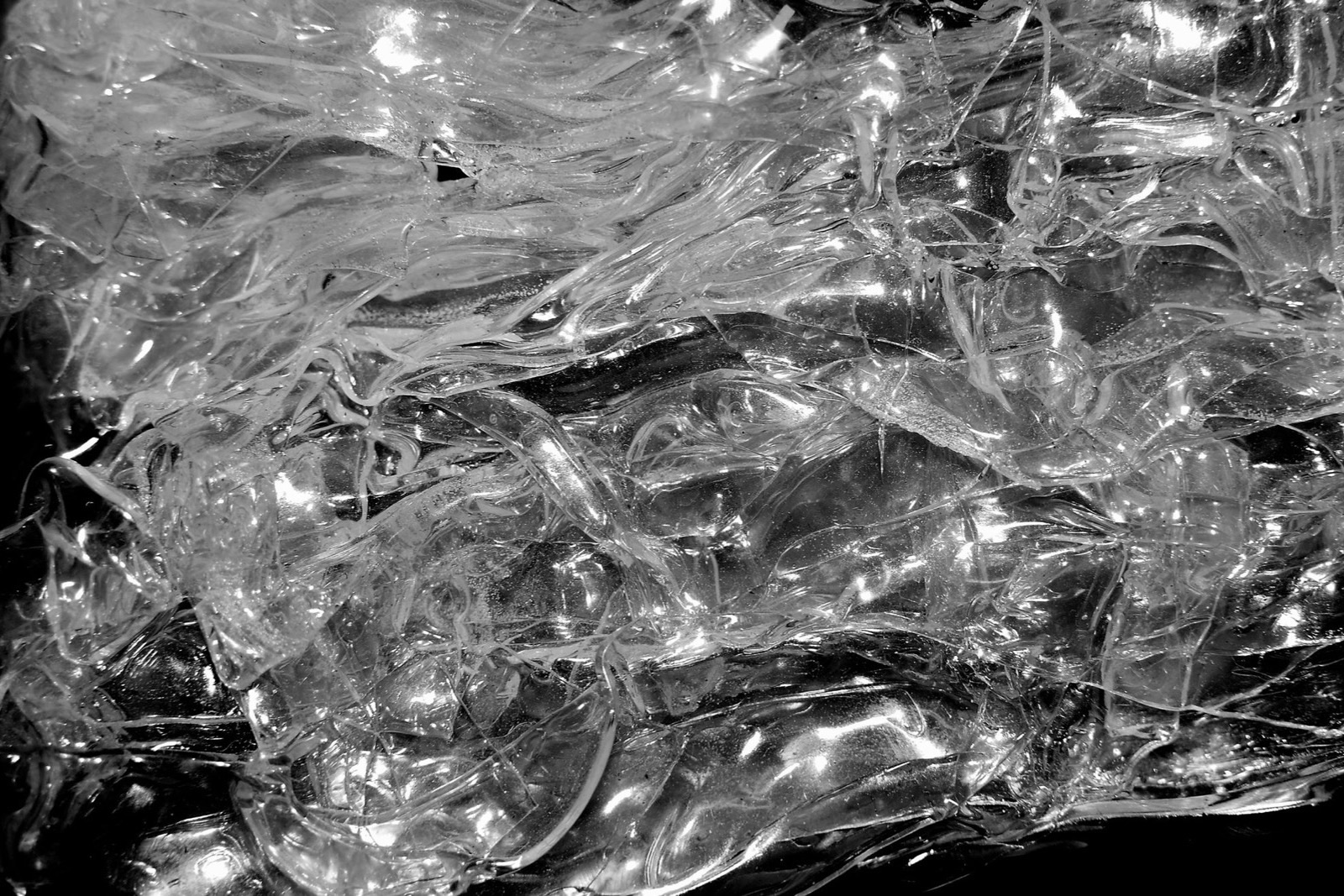
Acrylates/C10-30 Alkyl Acrylate Crosspolymer is a crosslinked acrylic polymer with an added long, hydrophobic alkyl chain portion (10 to 30 carbon atoms). In cosmetics, it thickens the water phase, forms gels and stabilizes oil-in-water emulsions.
1. What is Acrylates/C10-30 Alkyl Acrylate Crosspolymer?
According to the INCI definition cited by the CIR (Cosmetic Ingredient Review, US) Expert Panel, it is a copolymer of C10-30 alkyl acrylate and one or more monomers of acrylic acid, methacrylic acid or one of their simple esters, crosslinked with an allyl ether of sucrose or an allyl ether of pentaerythritol. Reported functions: emulsion stabilizer, viscosity increasing agent for the aqueous phase and viscosity increasing agent for the nonaqueous phase.
It is a polymer, so it has no fixed formula. According to the properties table in the 2011 CIR report (compiled from supplier documents): a white powder with a slightly acidic odor, a molecular weight above 500,000 Daltons, swells in water, and a 1% dispersion in water has a pH of about 2.5–3. Two raw materials with the same INCI can differ considerably in physical properties (CIR 2011).
2. How does it differ from carbomer?
| Criterion | Carbomer | Acrylates/C10-30 Alkyl Acrylate Crosspolymer | Source |
|---|---|---|---|
| Structure | Crosslinked acrylic acid homopolymer | Copolymer that also contains C10-30 alkyl acrylate (the hydrophobic portion) | CIR 2011, 2018 |
| Reported functions | Emulsion stabilizer, viscosity increasing agent for the aqueous phase | Emulsion stabilizer, viscosity increasing agent for the aqueous and nonaqueous phases; according to supplier documents, a primary emulsifier for oil-in-water emulsions | CIR 2011, 2018 |
| Interaction with nonionic surfactants | No displacement of the surfactant from the surface was observed; the network structure changed only slightly (with polysorbate 80) | Hydrophobic interaction; viscosity rises and then falls with polysorbate 80 concentration | Simovic 1999 (in vitro) |
| Electrolyte tolerance | No direct comparative study found; do not assume this ingredient tolerates salt better than carbomer. | — | |
| Polymerization solvent in the CIR reports | The report lists benzene as an impurity; the industry has adopted practices to eliminate benzene | Ethyl acetate–cyclohexane, n-hexane or benzene, depending on the manufacturer | CIR 2011, 2018 |
If you only need a clear, oil-free water gel, see the article on carbomer (in Vietnamese). If you need to suspend particles in a body wash or a facial cleansing gel, see the article on Acrylates Copolymer (in Vietnamese).
3. How it stabilizes emulsions and thickens
As described by Szucs et al. (2008), polymeric emulsifiers of this type can stabilize oil-in-water emulsions because the short lipophilic portion anchors into the oil droplet, while the long hydrophilic portion forms a microgel layer around the droplet.
The thickening part works like carbomer: the carboxyl groups must be neutralized for the polymer to swell (see the carbomer article). We have not found a verified source for viscosity by concentration, the working pH range or a specific neutralizer for this ingredient; take these from the technical data sheet (TDS) for the exact raw material grade and recheck them in the formula.
4. Evidence: mostly formulation studies
In the PubMed abstracts we searched (November 2026), there is no clinical trial measuring a skin-care benefit of this ingredient on its own. Level of evidence for any benefit beyond its role in texture: limited evidence.
- Interaction with surfactants: Simovic et al. (1999) used a 0.2% polymer dispersion with polysorbate 80 from 0.01% to 1.0%. The polymer displaced polysorbate 80 from the surface (measured by surface tension); viscosity and texture parameters increased as polysorbate 80 rose to 0.3%, after which the strength of the gel network decreased. Carbomer tested under the same conditions did not displace polysorbate 80 from the surface, and its network structure changed only slightly. The authors concluded that the interaction is hydrophobic in nature and concentration-dependent.
- Emulsion structure: Szucs et al. (2008) reported that emulsions made with a polymeric emulsifier form a distinctive, composition-dependent structure (a study of mucoadhesive pharmaceutical dosage forms).
5. Typical concentrations and product types
According to 2018 FDA data cited in the CIR report, this ingredient appeared in 3,135 formulations (1,696 in 2011). Maximum concentrations reported by industry in 2018, for grades polymerized in solvents other than benzene:
| Product category | Number of formulations (2018) | Maximum reported concentration |
|---|---|---|
| Leave-on products | 2,577 | 0.000045–3% |
| Rinse-off products | 546 | 0.1–1.8% |
| Eye area | 215 | 0.12–0.9% |
| Mucous membranes | 175 | 0.15–0.6% |
| Baby products | 17 | 0.3% |
These are reported levels, not recommended levels. In 2011, the reported levels were higher: up to 5% in both leave-on and rinse-off products.
Suitable formats: moisturizing gels with a small amount of oil, gel-creams, and light moisturizing creams made with a low-emulsifier process.
6. How to incorporate it and what to combine it with
- Mixing equipment: Simovic et al. (1999) reported that with a laboratory stirrer, the viscosity of the emulsion gel increased linearly as stirring speed and time increased; a disperser left polymer lumps and was judged unsuitable by the authors.
- Cationic ingredients: Kaiser et al. (2009, industry-affiliated authors) reported that alcohol gels containing an anionic thickener (carbomer or this ingredient) eliminated the persistent activity of chlorhexidine gluconate on human forearm skin; gels using a nonionic thickener did not. When combining it with cationic actives, test efficacy in the finished product.
- Low pH, electrolytes, high alcohol content: common sensitivities of acrylic polymers that require neutralization (general practice); there are no specific data for this ingredient, so test early.
7. Safety and who should take note
CIR 2011 conclusion (published in 2017): 23 crosslinked acrylic polymers, including this ingredient, are safe in the present practices of use and concentration described, except when polymerized in benzene; for grades polymerized in benzene, the data are insufficient to reach a conclusion. CIR 2018 conclusion: 126 acrylates copolymers are safe in the present practices of use and concentration described when formulated to be non-irritating; for this ingredient, the report considered only grades not polymerized in benzene.
Human data in the CIR 2011 report (mostly unpublished industry data): repeated insult patch tests with the undiluted raw material (100 subjects), a 10% dilution (2 × 111 subjects), a lotion containing 0.15% (107 subjects) and a foot cream containing 0.60% (51 subjects) caused no irritation or sensitization. One intensified test with the undiluted raw material (54 subjects) found mild irritation and no sensitization. In guinea pigs, a 2% aqueous dilution was classified as a weak sensitizer in a maximization test (5 animals).
Patch testing in patients: Soriano et al. (2024) patch tested 1,302 patients at 20 centers in the UK and Ireland (suspected (meth)acrylate allergy, facial dermatitis, or consecutive patients) with this ingredient at 2% in water: there were no reactions. The study was conducted in collaboration with the UK cosmetics industry association and included industry-affiliated authors. See also contact dermatitis caused by cosmetics.
Eyes: in rabbits, one undiluted grade was classified as a “borderline irritant” when the eyes were not rinsed; other undiluted grades caused mild to moderate irritation, which in some samples took until day 21 to clear; a neutralized 1% solution caused mild irritation that cleared within 72 hours (CIR 2011).
Residual benzene: according to CIR 2011, one grade polymerized in benzene has a specification of up to 0.5% benzene; 40 lots analyzed averaged 0.25% (0.04–0.41%). An industry cancer risk assessment put the risk at around 10⁻⁶, while CIR's upper-bound estimate was up to about 20 times higher; because of uncertain assumptions, the Panel did not conclude that this grade is safe.
Pregnant or breastfeeding women: data are insufficient; consult a doctor.
8. Perspective for brand owners (B2B)
- ASEAN: this ingredient is not listed in Annexes II, III, VI (version 2026-1) or VII (version 2025-2) of the ASEAN Cosmetic Directive. Benzene (Ref 47) and hexane (Ref 999) are in Annex II. CIR 2011 notes that one supplier polymerizes in n-hexane, with a maximum residual solvent level of 0.2%; if you use this grade, it needs a regulatory assessment. Ethyl acetate, cyclohexane and acrylic acid are not named in the annexes we checked.
- Neutralizers: sodium hydroxide as a pH adjuster under Annex III, Ref 15a (d): “pH < 11”. Triethanolamine under Ref 62: maximum 2.5% in leave-on products, not to be used with nitrosating systems.
- Raw material documentation: a COA stating the polymerization solvent, residual solvent, benzene, and residual acrylic acid and C10-30 alkyl acrylate (CIR 2011, one source: acrylic acid below 0.25%, ester below 0.5%).
- Microplastics in the EU: Regulation (EU) 2023/2055 does not name this ingredient. It applies to solid polymers in the form of small particles (≤ 5 mm), excludes polymers with a solubility above 2 g/L or that are degradable (according to the test annex), and exempts microparticles whose physical properties are permanently modified during use (the recitals give swelling or film-forming polymers as examples). CIR describes this group as insoluble and swelling in water. This article does not conclude whether this ingredient falls within the scope or is exempt; if you export to the EU, ask your supplier for an assessment.
- Claims: a texturizing agent; make no skin-care claims for the polymer itself.
Butter-C can use this ingredient in contract manufacturing of skin-care gels and gel-creams, choosing the raw material grade, neutralizer and pH for each formula and reviewing them against the ASEAN Annexes.
Frequently asked questions
Is Acrylates/C10-30 Alkyl Acrylate Crosspolymer a carbomer?
No. Carbomer is an acrylic acid homopolymer; this ingredient also contains a hydrophobic C10-30 alkyl acrylate portion, so it can also stabilize oil-in-water emulsions.
Can it be used to make creams without conventional emulsifiers?
According to supplier documents cited by CIR, this ingredient can be the primary emulsifier for oil-in-water emulsions. The oil content and stability must be confirmed by stability testing on the actual formula.
Does this ingredient cause allergies?
In a patch test study of 1,302 patients with this ingredient at 2%, there were no reactions. People who have been diagnosed with acrylate allergy should consult a dermatologist.
Why ask the supplier about the polymerization solvent?
CIR's safety conclusion does not apply to grades polymerized in benzene; benzene and hexane are both in ASEAN Annex II.
Can pregnant women use it?
There are not enough specific data; consult a doctor.
References
- Cosmetic Ingredient Review Expert Panel. Final Safety Assessment: Crosslinked Alkyl Acrylates as Used in Cosmetics (November 17, 2011). https://www.cir-safety.org/sites/default/files/crossl092011final_for%20posting.pdf · Journal version: Fiume MM et al. Safety Assessment of Cross-Linked Alkyl Acrylates as Used in Cosmetics. Int J Toxicol. 2017. PMID 29025328
- Cosmetic Ingredient Review Expert Panel (Fiume MM). Amended Safety Assessment of Acrylates Copolymers as Used in Cosmetics (Final Amended Report, 2018, released January 23, 2019). https://cir-reports.cir-safety.org/view-attachment?id=c3a1aad1-8c74-ec11-8943-0022482f06a6
- Simovic S et al. An investigation into interactions between polyacrylic polymers and a non-ionic surfactant: an emulsion preformulation study. Int J Pharm. 1999. PMID 10387950
- Simovic S et al. The Influence of Processing Variables on Performance of O/W Emulsion Gels Based on Polymeric Emulsifier (Pemulen (R)TR-2NF). Int J Cosmet Sci. 1999. PMID 18505536
- Szucs M et al. Mucoadhesive behaviour of emulsions containing polymeric emulsifier. Eur J Pharm Sci. 2008. PMID 18513929
- Soriano LF et al. Sensitisation to the acrylate co-polymers glyceryl acrylate/acrylic acid co-polymer, sodium polyacrylate and acrylates/C10-30 alkyl acrylate cross-polymer (Carbopol®) is rare. Contact Dermatitis. 2024. PMID 39187930
- Kaiser N et al. Inactivation of chlorhexidine gluconate on skin by incompatible alcohol hand sanitizing gels. Am J Infect Control. 2009. PMID 19398245
- Commission Regulation (EU) 2023/2055 amending Annex XVII to Regulation (EC) No 1907/2006 as regards synthetic polymer microparticles. https://publications.europa.eu/resource/cellar/acbe2469-5d16-11ee-9220-01aa75ed71a1.0006.03/DOC_1