 BUTTER-C
Newborn and young child skin: features and daily care
A baby’s skin is thinner, the water-handling ability of its stratum corneum is not yet fully developed, and it absorbs more of what is applied relative to body weight. Good care usually means doing less: bathe just enough, use fragrance-free products, keep the diaper area dry and airy, and protect from the sun with shade.
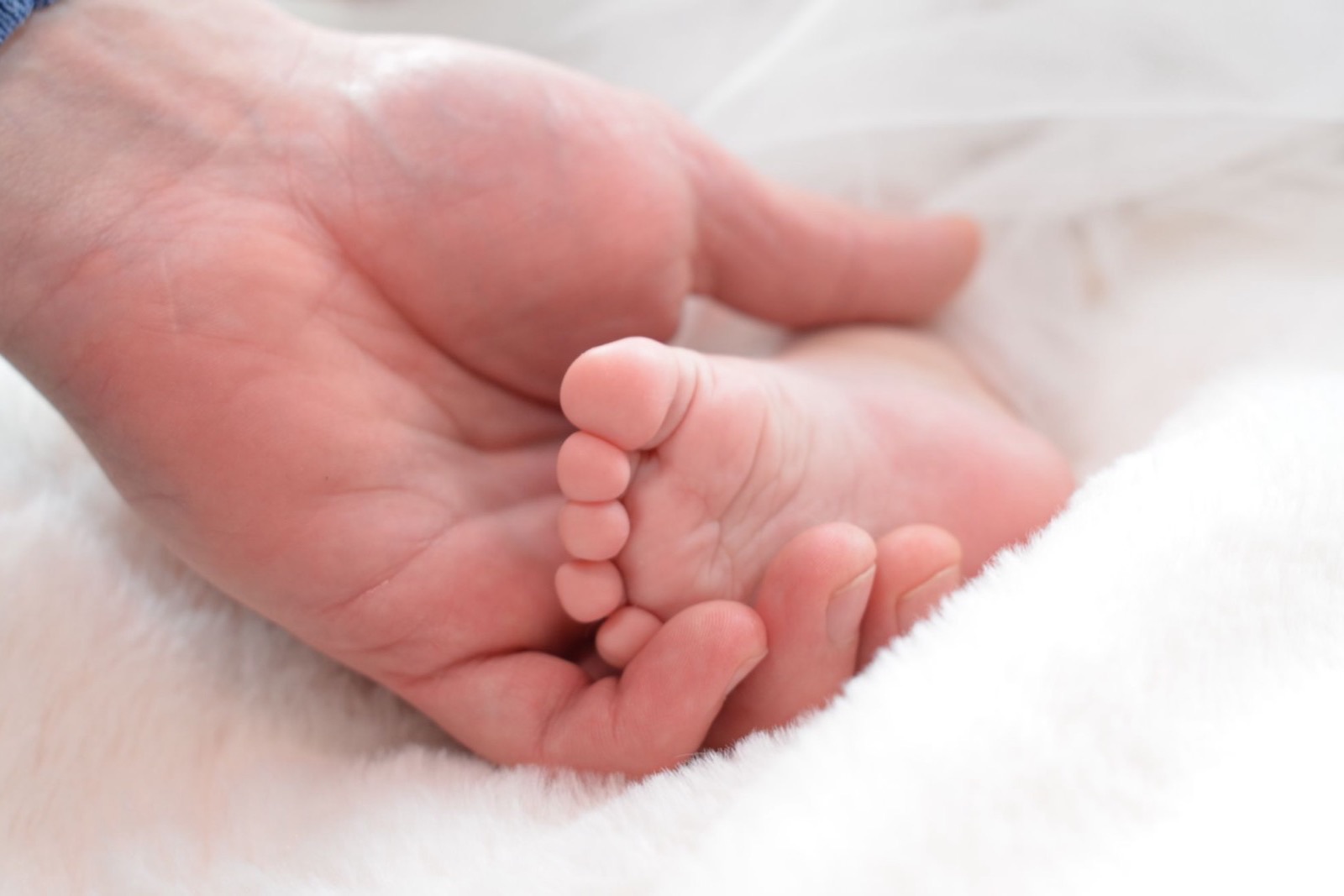
The skin of newborns and young children is not simply a smaller version of adult skin: the stratum corneum is thinner, its ability to hold water is still developing, and the skin surface area relative to body weight is larger. This article does not replace advice from a doctor.
1. How young children’s skin differs from adult skin
A review by Stamatas et al. (2011) summarizes non-invasive measurement studies in healthy infants and shows that infant skin continues to develop during the first years of life, contrary to the old notion that skin is fully mature at birth:
- The epidermis and stratum corneum are thinner and the corneocytes are smaller, at least until the second year of life.
- The water-handling properties of the stratum corneum are not fully developed before the end of the first year.
- The stratum corneum contains more water but less natural moisturizing factor (NMF) than adult skin.
The first author of the review works for a consumer goods company.
Large skin surface area relative to body weight. West et al. (1981) note that young children have a much greater ratio of surface area to body weight than adults, so they can absorb proportionately greater quantities of topical medication through the skin. The authors recall the deaths of infants after the use of baby powder contaminated with 6.6% hexachlorophene — a substance now prohibited in cosmetics (ASEAN Annex II, Ref 371). For this reason, products applied over large areas and left on a child’s skin need their own safety assessment. A weak skin barrier is also one link in atopic dermatitis.
2. Bathing and cleansing
A checklist based on recommendations from the American Academy of Dermatology (AAD):
- Bathe gently 2–3 times a week; sponge-bathe with a washcloth until the umbilical cord stump falls off and the area heals.
- Use lukewarm water and a mild, fragrance-free baby wash and baby shampoo.
- Use the wash only on dirty areas such as neck folds and the diaper area, then rinse well.
- Wash the baby’s bedding and clothes with a fragrance-free laundry detergent.
When a baby has diaper rash, the NHS (the UK’s National Health Service) suggests bathing every day but no more than twice a day, because frequent washing dries the skin. A baby wash & shampoo needs a mild cleansing system and a preservative system that is permitted for children under 3 years of age.
3. Moisturizing and the question of preventing atopic dermatitis
Applying a fragrance-free moisturizer when a baby’s skin is dry is common care. Whether applying it every day from birth prevents atopic dermatitis, however, is a medical research question, and the results are not consistent:
| Study | Participants, design | Results (according to the abstract) |
|---|---|---|
| BEEP (Chalmers et al., 2020) | 1,394 high-risk term infants in the UK; randomized, daily emollient application during the first year | Eczema at age 2: 23% vs. 25%, no difference (RR 0.95; 95% CI 0.78–1.16); more skin infections in the emollient group |
| PreventADALL (Skjerven et al., 2020) | 2,397 newborns from the general population in Norway and Sweden; cluster-randomized, factorial design; bath additive and facial cream from 2 weeks of age, at least 4 days a week | Atopic dermatitis by 12 months of age: 11% in the skin-intervention-only group vs. 8% in the no-intervention group; no reduction in risk |
| Kelleher et al., 2022 (Cochrane) | Systematic review in healthy term infants: 33 randomized trials identified; eczema results pooled from 7 trials (3,075 infants) | Probably does not change the risk of eczema at 1–3 years of age (RR 1.03; moderate-certainty evidence); probably increases the risk of skin infection (RR 1.33; moderate certainty) |
| Simpson et al., 2025 | 1,247 infants at 25 clinics in the US, not selected for risk; daily full-body application starting before 9 weeks of age | Physician-diagnosed atopic dermatitis by 24 months: 36.1% vs. 43.0% (RR 0.84; 95% CI 0.73–0.97) |
Cochrane searched the literature up to September 2021, so it does not include the 2025 trial; that trial has a 2026 correction concerning the author list and figures 3 and 4. The BEEP team concluded that families with a history of eczema, asthma or allergic rhinitis should not apply emollients daily to newborns in order to prevent eczema. Cochrane also noted that the risk of the infant slipping may be increased (low-certainty evidence, wide confidence interval), so take care when holding the baby after application. On labels, Appendix 03-MP of Thông tư 06/2011/TT-BYT (Circular 06/2011/TT-BYT, Vietnam’s Ministry of Health circular on cosmetic product management) does not allow cosmetics to be presented as products for disease prevention, so a baby moisturizer must not claim to “prevent eczema.”
4. Baby massage oil
Olive oil is often considered “gentle” for babies, but the data do not support this: in adults, applying olive oil for 4 weeks reduced the integrity of the stratum corneum; a pilot trial in 115 newborns found that oil increased skin hydration, but the lipid structure of the stratum corneum improved less than in the group that used no oil, and the authors advised caution (see our article on olive oil in cosmetics (in Vietnamese)). Evidence on massage oils for babies in general is still limited; if you use one, choose an oil without fragrance or essential oils, and do not apply it to skin that is red or oozing.
5. The diaper area
Diaper dermatitis (commonly called diaper rash) is common in young children. According to the NHS, signs may include red or raw patches in the diaper area, spots or blisters, dry and scaly skin, and the baby being itchy, sore or uncomfortable. Common causes: the skin being in contact with urine or stool for a long time; the diaper rubbing; wipes that contain fragrance or alcohol; diarrhea; and fungal infection. The NHS advises:
- Change wet or dirty diapers as soon as possible; use diapers that fit well and are not fastened too tightly.
- Keep the skin clean and dry; leave the baby without a diaper when possible.
- Clean with water or with fragrance-free, alcohol-free wipes.
- Do not use soap, body lotion, bubble bath or talcum powder on the affected area.
- A pharmacist may suggest applying a thin layer of barrier cream at each diaper change.
Within the scope of cosmetics, a diaper cream works only at the level of forming a moisture barrier, keeping the skin moisturized and soothing it. When diaper rash is severe, spreading or long-lasting, see a doctor; medicine, if needed, is prescribed by the doctor.
6. Fragrance, essential oils and preservatives
The AAD recommends fragrance-free baby wash, shampoo and laundry detergent for babies; the NHS lists fragranced wipes as one cause of irritation in the diaper area. For essential oils (mixtures of aromatic substances), the sources we read contain no data specific to young children’s skin — the evidence is limited, so fragrance-free products are preferable. ASEAN Annex III (version 2026-1) leaves entries 67–92 blank (“Entries left intentionally blank”) and has no separate entry for fragrance allergens.
For preservatives, ASEAN sets specific conditions for children under 3 years of age (version 2026-1, June 22, 2026):
| Substance | Annex, Ref | Condition (excerpt) |
|---|---|---|
| Salicylic acid and its salts (preservative, maximum 0.5% as acid) | VI, Ref 3 | Acid: “Not to be used in products for children under three years of age.” Salts: “...except for shampoos” |
| Salicylic acid (other purposes) | III, Ref 98 | “Not to be used in preparations for children under three years of age.” |
| Butylparaben, propylparaben and their salts (total maximum 0.14% as acid) | VI, Ref 12a | “Not to be used in leave-on products designed for application on the nappy area of children under three years of age.” Label of leave-on products for children under 3: “Do not use on the nappy area” |
| IPBC (rinse-off 0.02%; leave-on 0.01%) | VI, Ref 56 | Rinse-off: “Not to be used in preparations for children under three years of age, except in bath products/shower gels and shampoos”; leave-on: not to be used for children under 3 years of age, not to be used in “body lotion and body cream” |
| Talc (powder form for children under 3 years of age) | III, Ref 59 | Label: “Keep powder away from children's nose and mouth” |
At Butter-C, baby wash & shampoo, moisturizers, massage oils and diaper creams are classified as products for children under 3 years of age in our internal regulatory check; every suggested ingredient is checked against the conditions above.
7. Sun protection for children
- Shade first: the AAD considers shade the main form of sun protection for babies (umbrellas, canopies, stroller hoods).
- Clothing: long-sleeved shirts, lightweight long pants, a wide-brimmed hat and UV-protective sunglasses; you can choose fabrics labeled with a UPF rating.
- Babies under 6 months: the AAD advises limiting sunscreen; only when shade and suitable clothing are not available should a minimal amount be applied to exposed skin.
- When using sunscreen: broad-spectrum, water-resistant, SPF 30 or higher; reapply every 2 hours or right after swimming. Sunscreens containing titanium dioxide or zinc oxide are less likely to irritate a baby’s sensitive skin (AAD).
Regulations: zinc oxide is in ASEAN Annex VII (version 2025-2), Ref A29, maximum 25%, not to be used in applications that may lead to inhalation into the lungs; titanium dioxide is Ref 27, maximum 25% (powder forms containing 1% or more of particles with an aerodynamic diameter ≤ 10 µm must comply with Annex III, Ref 338). Annex VII sets no age-based conditions for these two substances.
8. When to take a child to the doctor
- Diaper rash does not get better, gets worse or spreads; the baby has a high fever; the baby seems very uncomfortable (NHS).
- Skin that is dry, itchy, red or oozing for a long time or keeps coming back — needs a doctor’s diagnosis.
- The skin reacts to a new product: stop using it and ask a doctor.
- Questions about the baby’s skin: the AAD advises asking a pediatrician or dermatologist.
Frequently asked questions
Does applying moisturizer from birth prevent atopic dermatitis?
There is no firm conclusion: BEEP, PreventADALL and the Cochrane review found no reduction in risk, while one 2025 trial recorded a lower risk. Families with a history of allergy should ask a doctor.
Should I use baby powder?
The NHS advises against using talcum powder on diaper rash. Talc-containing powder for children under 3 years of age must carry a warning to keep it away from the child’s nose and mouth.
Can babies under 6 months use sunscreen?
The AAD advises prioritizing shade and clothing and limiting sunscreen at this age.
References
- Stamatas GN et al. Infant skin physiology and development during the first years of life: a review of recent findings based on in vivo studies. Int J Cosmet Sci. 2011. PMID 20807257
- West DP et al. Pharmacology and toxicology of infant skin. J Invest Dermatol. 1981. PMID 7240782
- Chalmers JR et al. Daily emollient during infancy for prevention of eczema: the BEEP randomised controlled trial. Lancet. 2020. PMID 32087126
- Skjerven HO et al. Skin emollient and early complementary feeding to prevent infant atopic dermatitis (PreventADALL): a factorial, multicentre, cluster-randomised trial. Lancet. 2020. PMID 32087121
- Kelleher MM et al. Skin care interventions in infants for preventing eczema and food allergy. Cochrane Database Syst Rev. 2022. PMID 36373988
- Simpson EL et al. Emollients to Prevent Pediatric Eczema: A Randomized Clinical Trial. JAMA Dermatol. 2025. PMID 40699587
- American Academy of Dermatology. How to care for your baby's skin, hair, and nails. https://www.aad.org/public/everyday-care/skin-care-basics/care/baby-care-skin-hair-nails
- NHS. Nappy rash. https://www.nhs.uk/baby/caring-for-a-newborn/nappy-rash/