 BUTTER-C
PEG-20 Glyceryl Triisostearate: emulsifier in cleansing oils
PEG-20 glyceryl triisostearate is a familiar ingredient on cleansing oil labels. This article summarizes what it is, why cleansing oils turn milky on contact with water, the available safety data (mostly inferred from similar substances), the 1,4-dioxane impurity and where evidence is still lacking.
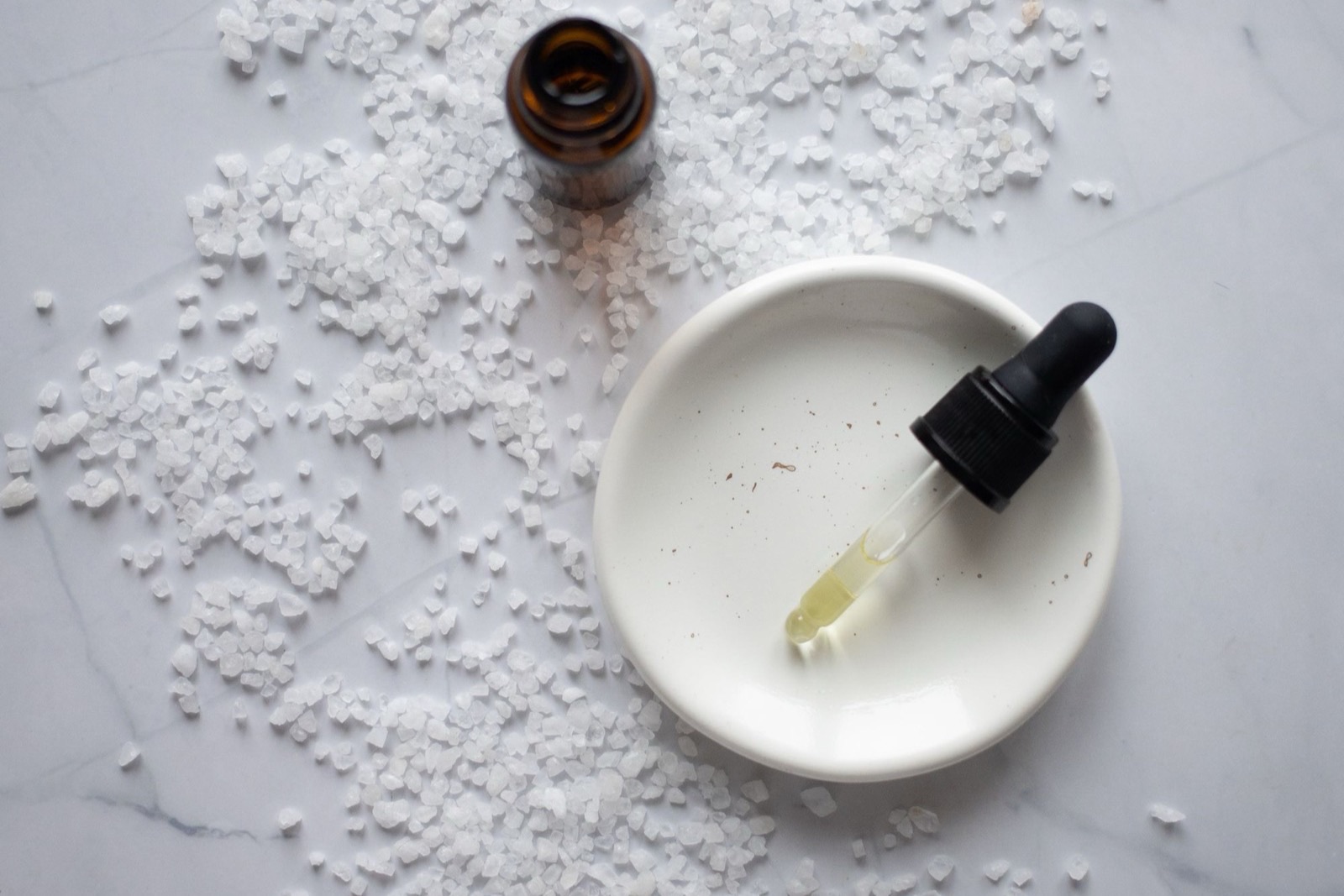
PEG-20 glyceryl triisostearate (INCI: PEG-20 Glyceryl Triisostearate; common chemical name: polyoxyethylene (20) glyceryl triisostearate) is a nonionic surfactant made by ethoxylating glyceryl triisostearate with about 20 moles of ethylene oxide. In cosmetics, it is mainly used as the emulsifier in cleansing oils: it helps the oil, once it has dissolved makeup, turn milky on contact with water so that it can be rinsed away. Published data specific to this ingredient are scarce.
1. What is PEG-20 glyceryl triisostearate?
It is a polyethylene glycol (PEG) derivative of glyceryl triisostearate, that is, the ester of glycerin with three isostearic acid groups (isostearic acid is a branched-chain fatty acid with 18 carbons). For PEG glyceryl esters, CIR explains that the number in the name is the average number of ethylene oxide units, so the ingredient is a mixture with no single defined molecular formula.
According to the safety review by Jang et al. (2015) of PEG compounds used in cosmetics, PEG-20 glyceryl triisostearate has a molecular weight above 1,000 and low water solubility, and is used as an emulsifier, dispersant and solubilizer. PubChem lists CAS 86846-21-1 for this name (a substance record with no defined structure); the same number is also linked to PEG-3 and PEG-5 glyceryl triisostearate, so it is not specific to the 20 EO level.
Do not confuse it with PEG-20 glyceryl diisostearate (only two isostearic acid groups), a different INCI ingredient that was assessed by the CIR (Cosmetic Ingredient Review, US) Expert Panel in 2022.
2. Why do cleansing oils “turn milky” on contact with water?
A cleansing oil is an anhydrous system: it consists mostly of oils and light esters that dissolve makeup. A surfactant that is oil-soluble yet sufficiently hydrophilic, such as PEG-20 glyceryl triisostearate, is already present in the oil phase. When water is added, it helps the mixture disperse into a milky-white oil-in-water emulsion, carrying the oil and makeup away on rinsing. This is a general formulation principle; no published study has described this mechanism specifically for PEG-20 glyceryl triisostearate.
| Common claim | Verified data | Level of evidence |
|---|---|---|
| “Cleansing oil removes water-resistant sunscreen better than a cleanser” | 20 people: 5.8% of the water-resistant sunscreen remained after the cleansing oil, and 36.8% after a foaming cleanser (Chen et al., 2020) | One small study, one cleansing oil; the abstract does not state its ingredients |
| “Less rubbing means less skin irritation” | 35 women with mild atopic dermatitis, 4 weeks using a cleansing oil that required little rubbing: dryness, scaling, redness and itching decreased significantly (Hosokawa et al., 2021; authors affiliated with a company, the abstract does not describe a control group) | Results for the whole product, not for the emulsifier alone |
| “PEG-20 glyceryl triisostearate is gentle on the skin” | Did not trigger Ca²⁺ influx in cultured keratinocytes at concentrations up to 0.01% (Zhang et al., 2026 — in vitro) | Preliminary signal; no human testing yet for this ingredient alone |
The abstracts of the two human studies do not state the ingredients of the cleansing oils, so the results cannot be attributed to PEG-20 glyceryl triisostearate. Limited evidence. How to pair a cleansing oil with a cleanser is covered in the article on double cleansing.
3. Typical concentrations and product types
There is currently no CIR concentration-of-use survey for this ingredient. The source we found is the review by Jang et al. (2015), in a passage citing a 2010 report by Australia's industrial chemicals assessment agency (NICNAS): rinse-off cleansing products (facial cleansers, body washes) contain up to 20%, and leave-on products up to 5%. These are secondhand figures describing levels found in products, not recommended levels; Butter-C has not been able to read the original NICNAS report.
| Product type | Role of PEG-20 glyceryl triisostearate | What to test in the formula |
|---|---|---|
| Cleansing oil | Emulsifier in the oil phase, helps it rinse off | Speed of turning milky-white, oily film after rinsing, clarity at low temperature |
| Cleansing balm | As in cleansing oil, within a wax base | Emulsification of the balm itself, hardness after liquids are added |
| Creams, lotions (leave-on) | Emulsifier, dispersant (per Jang 2015) | Emulsion stability, skin tolerance |
The actual use level depends on the oil phase and is finalized through emulsification tests with water: too little leaves a greasy film after washing, while too much increases residual surfactant. The HLB value of each lot is stated by the supplier; Butter-C does not yet have an independent published source to cite for this figure.
4. How to use and combine
- Apply the cleansing oil to dry skin with dry hands, massage gently, add a little water so that it turns milky, then rinse thoroughly; wet hands let water get into the bottle, which can easily make the oil cloudy.
- For easily irritated skin, prefer products that clean thoroughly without hard rubbing (a suggestion from one study in people with mild atopic dermatitis, Hosokawa 2021).
- Micellar cleansing waters use water-soluble surfactants, for example PEG-6 caprylic/capric glycerides (in Vietnamese); PEG-20 glyceryl triisostearate belongs to oil-based systems, and the two types are not direct substitutes for each other.
5. Safety: who should take note
Not individually assessed by CIR. In a search of CIR's ingredient list on November 22, 2026, Butter-C did not find PEG-20 Glyceryl Triisostearate in any report. The closest ingredient is PEG-20 glyceryl diisostearate, one of a group of 14 “fatty ester end-capped alkoxylates” that CIR concluded are safe in cosmetics in the present practices of use and concentration (final report, 2022); PEG-20 glyceryl diisostearate itself was not reported to be in use at that time. CIR notes that this group consists of large molecules (above 1,600 Da) that are unlikely to penetrate the skin. That conclusion does not automatically apply to the triisostearate.
Toxicity data inferred from similar substances. The review by Jang et al. (2015) estimated the safety of PEG-20 glyceryl triisostearate on the basis of glyceryl triisostearate, sorbitan sesquiisostearate and PEG-20 sorbitan esters: an expected oral LD50 above 2,000 mg/kg (similar substances tested in rats); glyceryl triisostearate was not irritating to rabbit skin or eyes and was not sensitizing in guinea pigs; the two groups of sorbitan esters were not sensitizing in repeated patch tests in humans and were mildly irritating to the eyes. The authors concluded that this ingredient is unlikely to harm consumers, but acknowledged that very little data specific to it exist.
In vitro. In a test of 26 surfactants on regular human HaCaT keratinocytes and on cells overexpressing the TRPV1 receptor (associated with stinging sensations), PEG-20 glyceryl triisostearate did not induce Ca²⁺ influx at any of the six concentrations tested, the highest being 0.01% (Zhang et al., 2026; authors affiliated with a company). These are cultured cells and do not replace testing in humans.
Oxidation during storage. Ethoxylated surfactants are readily oxidized by oxygen in the air. Patch testing in 528 dermatitis patients showed that the oxidized forms had a higher irritation potential than the non-oxidized forms; formaldehyde and acetaldehyde formed during autoxidation are sources of allergen exposure to be aware of (Matura et al., 2004; the abstract does not mention PEG-20 glyceryl triisostearate). The raw material and finished products should be kept tightly closed and away from heat.
Who should take note. A PubMed search (November 22, 2026) found no case reports of contact allergy naming this ingredient. People who have reacted to several PEG-containing products should consult a dermatologist; people diagnosed with a PEG allergy caused by medicines or vaccines (a medical context) should consult an allergist. Avoid getting cleansing oil in the eyes. Pregnant women: data are insufficient; consult a doctor.
6. 1,4-dioxane and ethylene oxide
Like other PEG-containing ingredients, PEG-20 glyceryl triisostearate may contain traces of 1,4-dioxane, a by-product of the ethoxylation step; CIR notes that the cosmetics industry uses additional purification steps to limit this impurity (CIR, 2015; see also the article on PEG-7 glyceryl cocoate (in Vietnamese)). For the PEG glyceryl diisostearate group, one supplier reported ethylene oxide impurity below 1 ppm, and CIR considered that ethylene oxide is highly volatile and is not expected to remain during formulation (CIR, 2022). There are no published measurements specifically for PEG-20 glyceryl triisostearate.
Annex II of the ASEAN Cosmetic Directive (version 2026-1) has entries for “Ethylene oxide”, CAS 75-21-8 (Ref 182), and “Dioxane”, CAS 123-91-1 (Ref 343). The ASEAN Guidelines on Limits of Contaminants for Cosmetics (version 3.0) set 1,4-dioxane at no more than 10 ppm from June 19, 2023, applicable when finished products are analyzed in post-market surveillance.
7. Notes for brand owners (B2B)
- ASEAN regulations: PEG-20 glyceryl triisostearate is not listed in Annexes II, III, VI (version 2026-1) or VII (version 2025-2), so there is no specific concentration limit or label warning for it; finished products are still subject to the 1,4-dioxane limit in section 6.
- Raw material documentation: a COA for each lot that includes a 1,4-dioxane specification; a statement on residual ethylene oxide; sealed storage to limit oxidation.
- Claims: “removes makeup and water-resistant sunscreen”, “rinses off without leaving an oily film” and “gentle” should only be stated after testing on the finished product itself; do not promote this emulsifier as a skin-care active.
- “PEG-free” labels: if the product contains this ingredient, do not label it “PEG-free”. Switching to polyglyceryl esters means changing solubility, emulsification speed and clarity at low temperature; it requires re-screening and is not a one-for-one swap.
Butter-C uses PEG-20 glyceryl triisostearate or a PEG-free emulsifier system when manufacturing cleansing oil and cleansing balm, finalizing the ratio for each formula through emulsification tests with water, stability testing and on-skin evaluation.
Frequently asked questions
What does PEG-20 glyceryl triisostearate do in a cleansing oil?
It is an emulsifier: it helps the oil that has dissolved makeup turn milky on contact with water so that it rinses off cleanly, limiting the oily film left on the skin.
Is this ingredient safe?
CIR has no report specific to it. A 2015 review judged this ingredient unlikely to harm consumers based on data for similar substances; the closest ingredient CIR has assessed (PEG-20 glyceryl diisostearate) was concluded to be safe in the present practices of use, but that conclusion does not automatically apply to this ingredient.
Does a cleansing oil containing this ingredient contain 1,4-dioxane?
PEG-containing ingredients may contain traces of 1,4-dioxane; manufacturers check this with a COA for each lot. Under the ASEAN guidelines, finished products must not exceed 10 ppm.
Can oily or acne-prone skin use it?
There are no published studies on PEG-20 glyceryl triisostearate on acne-prone skin. The potential to cause breakouts depends on both the whole formula and thorough rinsing; if breakouts increase after switching products, stop using it and consult a dermatologist.
References
- Jang HJ et al. Safety Evaluation of Polyethylene Glycol (PEG) Compounds for Cosmetic Use. Toxicol Res. 2015. PMID 26191379
- Cosmetic Ingredient Review. Safety Assessment of Fatty Ester End-Capped Alkoxylates as Used in Cosmetics (Final Report, released October 12, 2022). https://cir-reports.cir-safety.org/view-attachment?id=346b6b29-7e34-6255-9156-3ae1eba8ec01
- Cosmetic Ingredient Review. Safety Assessment of PEGylated Alkyl Glycerides as Used in Cosmetics (Final Report, released January 13, 2015). https://www.cir-safety.org/sites/default/files/PEGgly122014FR.pdf
- Zhang C et al. The Role of TRPV1 Channel in Cosmetic Safety Evaluation. ACS Omega. 2026. PMID 41552596
- Chen W et al. The optimal cleansing method for the removal of sunscreen:Water, cleanser or cleansing oil? J Cosmet Dermatol. 2020. PMID 31157512
- Hosokawa K et al. Rubbing the skin when removing makeup cosmetics is a major factor that worsens skin conditions in atopic dermatitis patients. J Cosmet Dermatol. 2021. PMID 33040474
- Matura M et al. Multicentre patch test study of air-oxidized ethoxylated surfactants. Contact Dermatitis. 2004. PMID 15500667
- ASEAN Cosmetic Committee. ASEAN Guidelines on Limits of Contaminants for Cosmetics (Release Version 3.0). https://file.go.gov.sg/asean-guidelines-on-limits-of-contaminants-for-cosmetics.pdf