 BUTTER-C
Pullulan in cosmetics: film-forming polymer and safety data
Pullulan is a water-soluble film-forming polymer that can be used in sleeping masks, makeup setting sprays and hair products, and it is also a capsule shell material for food supplements. This article clearly separates what is supported by data — clear films, an oxygen barrier when dry, the CIR conclusion — from the advertising claim of “instant skin tightening”, for which there are no published studies.
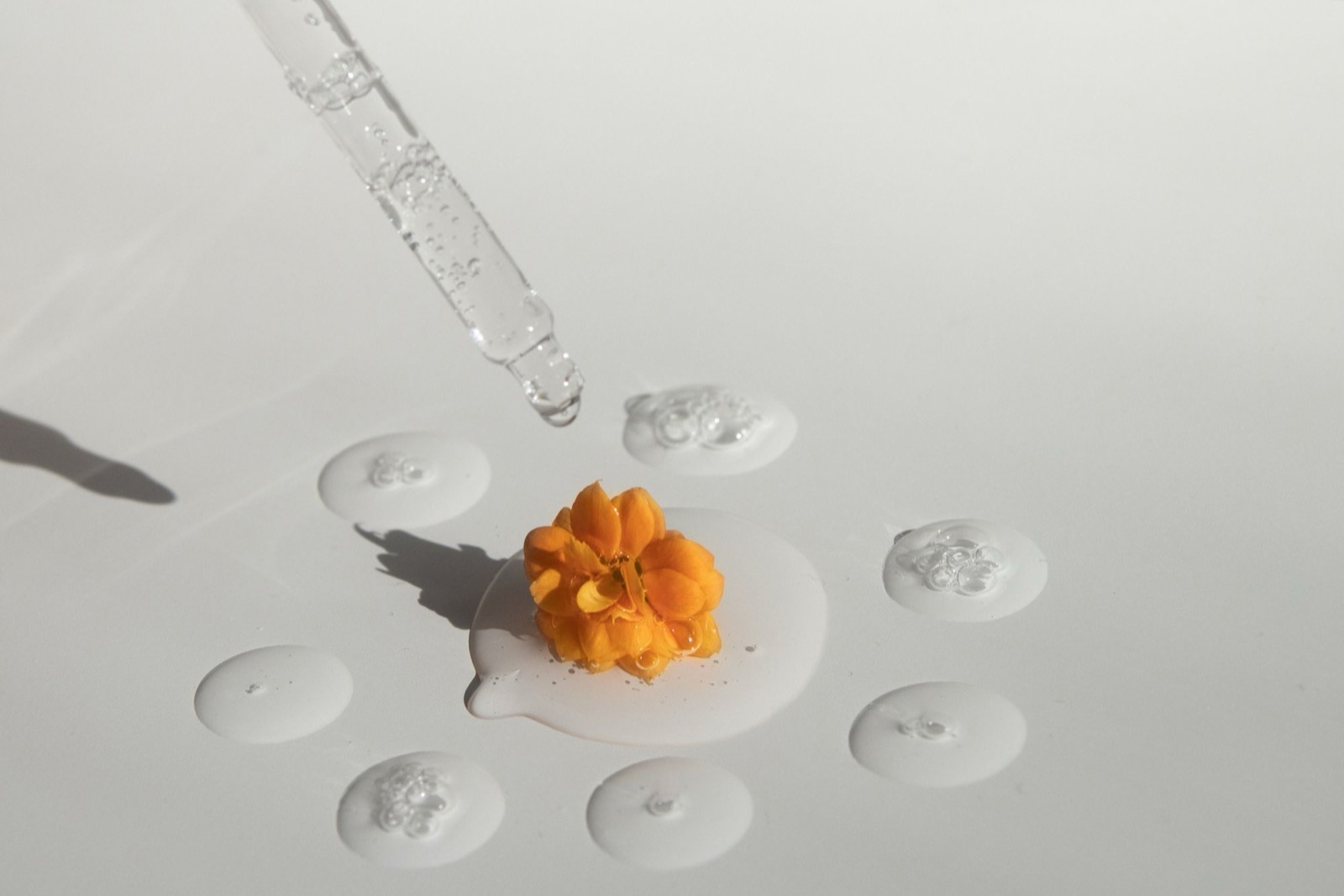
Pullulan (INCI: Pullulan) is a polysaccharide secreted extracellularly by the fungus Aureobasidium pullulans when it ferments hydrolyzed starch. It is a linear, uncharged glucan that dissolves readily in water and forms a transparent film when dry; in cosmetics, pullulan is mainly a film former. It is also the food additive E 1204, used for food supplement capsule shells (EFSA, 2025).
1. What is pullulan?
According to the EU food additive specification (Regulation 231/2012) and the JECFA specification, as cited by EFSA, pullulan is “a linear, neutral glucan consisting mainly of maltotriose units connected by α-1,6 bonds”. Each maltotriose unit consists of three glucose molecules linked α-1,4; the JECFA technical report (2005) additionally notes a small proportion (about 6%) of interspersed maltotetraose units.
According to the specification, hydrolyzed starch is fermented by a non-toxigenic strain of A. pullulans; the fungal cells are removed by filtration, the filtrate is heat-sterilized, and pigments and impurities are then removed by adsorption and ion exchange. EFSA records that the E 1204 production strain is not genetically modified and was selected by conventional mutagenesis.
The molecular weight is not fixed: depending on culture conditions, it is about 10–3,000 kDa (JECFA, 2005); 10 commercial samples submitted to EFSA were in the range of 310–420 kDa. The CAS number given in the JECFA specification is 9057-02-7.
| Parameter (EU and JECFA specifications, cited in EFSA 2025) | Value |
|---|---|
| Glucan content | Not less than 90% (on the dried basis) |
| Solubility | Soluble in water; practically insoluble in ethanol |
| pH of a 10% solution | 5–7 |
| Viscosity of a 10% solution at 30 °C | 100–180 mm²/s |
| Lead | Not more than 1 mg/kg |
| Microbiology | Yeasts and molds not more than 100 CFU/g; no coliforms or Salmonella in 25 g |
This is a food additive specification and is not mandatory for cosmetic ingredients, but it is a reference point when reviewing a certificate of analysis (COA).
2. What does pullulan do in a formula?
- Film forming. JECFA describes pullulan films as transparent, water-soluble, resistant to oil and grease, antistatic and of low oxygen permeability; the films are made by rapid evaporation of a 5–10% solution and can be as thin as 0.01 mm. The report of the CIR Expert Panel (Cosmetic Ingredient Review, United States) on 34 microbial polysaccharides lists the general functions of the group: emulsion stabilizing, film forming, binding, viscosity increasing and skin conditioning (Fiume et al., 2016).
- Low viscosity, non-gelling. Pullulan solutions are viscous but do not form a gel; their viscosity is lower than that of guar, close to that of gum arabic, and changes little with pH or salts (JECFA, 2005). To obtain a gel, a thickener such as xanthan gum (in Vietnamese) or sclerotium gum (in Vietnamese) needs to be added.
- Uncharged: it has no anionic or cationic groups (JECFA, 2005); compatibility with surfactants still has to be tested.
Oxygen barrier film — data from food packaging. In a materials study (Uysal Unalan et al., 2017), a pullulan coating about 0.75–0.8 µm thick reduced the oxygen transmission rate through PET film from about 129 to about 6 mL/m²/24 h at 0% relative humidity; at 90% humidity, the figure was about 101 (uncoated PET: about 107). In other words, the film is a good oxygen barrier when dry and becomes progressively weaker when humid. These are packaging data; they do not show that a cosmetic film on the skin is “antioxidant” or protects active ingredients.
On hair (laboratory). Zhang et al. (2026) tested low (10 kDa), medium (200 kDa) and high (2,000 kDa) molecular weight pullulan at a concentration of 2% on hair: on healthy hair, the high-molecular-weight grade reduced friction by 41.5% by forming a surface film, but only at the hair cuticle; on UV-damaged hair, the medium grade gave better results, restoring moisture by 35.5% and increasing tensile strength by 40.6%. The proposed mechanism is hydrogen bonding with the keratin network. These are in vitro data (including the part tested on HaCaT cells), not yet tested on users; one author is also affiliated with a biotechnology company.
3. “Instant skin tightening”: how far does the evidence go?
Pullulan is often promoted as giving “instant skin tightening”, but a PubMed search (November 2026) found no published study measuring firmness or wrinkles on human skin after application of pullulan alone: limited evidence. If users feel their skin tighten, this is a mechanical and sensory effect of the dry polymer film on the skin surface — the film is water-soluble, so it washes off — not an action on collagen or on skin structure. A “tightening” claim must be based on testing of the finished product itself, at the level of improving appearance.
4. Typical concentrations and product types
The CIR Quick Reference Table (09/2017 update) lists “0.03 to 17%” for pullulan in the limits column accompanying the safety conclusion. This is the range of concentrations reported at the time of the assessment, not a recommended level; the table does not state which product type corresponds to the highest level. The full CIR report could not be accessed via a public link during the writing of this article.
Suitable formats: sleeping masks, serums, makeup setting sprays, hair products. Food data do not replace cosmetic data:
| Context | Role, use level | Safety assessment (source) |
|---|---|---|
| Cosmetics | Film former; reported at 0.03–17% (CIR, 2017 table) | CIR: safe in the present practices of use and concentration (Quick Reference Table 09/2020) |
| Food supplement capsule shells and coated tablets | Capsule shells contain 15–90% pullulan; coated tablets contain up to 2% (JECFA, 2005) | EFSA 2025: no need for a numerical ADI — oral intake data |
| Breath-freshening films, confectionery, jams | Breath-freshening films up to 90%; other foods 0.2–5% (JECFA, 2005) | As above |
5. Formulation notes
- Dissolving: soluble in hot and cold water (JECFA), about 323–357 g/L at 20 °C (EFSA); dissolve it in the water phase before adding alcohol.
- Alcohol and PEG: practically insoluble in ethanol; the identification test in the specification consists of adding PEG 600 to a 2% pullulan solution to form a white precipitate. Sprays containing alcohol or a high level of PEG need clarity and stability testing.
- pH and heat: solutions are stable at pH 3–8; prolonged heating below pH 3 lowers viscosity through chain hydrolysis (JECFA). Data submitted to EFSA: after boiling for 2 hours, viscosity dropped markedly at pH 2–3 but was maintained at pH 7.
- Moisture: JECFA describes the powder as non-hygroscopic, but EFSA records that its moisture content varies with air humidity; store tightly closed.
- Enzymes, microbiology: the enzyme pullulanase cleaves the chains and markedly thins the solution (an identification test); the raw material needs microbiological testing, and water-based formulas need a preservative efficacy (challenge) test (in Vietnamese).
- Polymer blends: it can be combined with PVP (in Vietnamese); tackiness, streaking when layered and spray nozzle clogging must be tested on the finished product.
6. Safety and who should take care
CIR conclusion. The CIR Quick Reference Table (09/2020) rates pullulan “S” — safe in the present practices of use and concentration — citing the report on the microbial polysaccharide group published in Int J Toxicol in 2016. The abstract states that the Panel reviewed the available animal and clinical data (Fiume et al., 2016); because the full text could not be accessed, this article does not report irritation or sensitization data specific to pullulan.
Oral intake data (not to be used to infer safety for application to the skin):
- EFSA (2025): no concern for genotoxicity; in vitro, pullulan is cleaved by salivary amylase, pancreatic amylase and intestinal iso-amylase, and is then fermented into short-chain fatty acids in the large intestine; adults consuming 10 g/day or more may experience abdominal fullness, flatulence, bloating and mild cramping. Conclusion: no need for a numerical ADI, and no safety concern at the reported use levels.
- Kimoto et al. (1997), whose first author was affiliated with a company laboratory: rats fed diets containing 1–10% pullulan for 62 weeks (planned for 24 months, stopped early because many animals died of intercurrent pneumonia) showed no signs of toxicity attributable to pullulan; the Ames test was negative up to 10,000 µg/plate, with and without metabolic activation.
Allergy. A PubMed search (November 2026) found no case reports of contact allergy to pullulan; EFSA (2025) likewise found no new information on hypersensitivity to this additive. The absence of reports does not mean that it cannot occur.
Who should take care: anyone who has previously reacted to a product containing pullulan should stop using it and consult a dermatologist. Pregnant or breastfeeding women: data are insufficient; consult a doctor.
7. Perspective for brand owners (B2B)
- ASEAN regulations: Pullulan (also searched by CAS 9057-02-7 and “Aureobasidium”) is not listed in Annexes II, III, VI (version 2026-1, June 22, 2026) or VII (version 2025-2, December 12, 2025) of the ASEAN Cosmetic Directive; it has no concentration limit or specific label warning.
- Labeling: INCI “Pullulan”; Myristoyl Pullulan is a different INCI.
- “Natural”: write “polysaccharide obtained through fermentation”; avoid “completely natural”, because the ingredient has gone through several purification steps.
- Batch COA: glucan content, viscosity of a 10% solution, pH, lead, microbiology; the E 1204 specification serves as a benchmark for comparison.
- Claims: “forms a thin film” and “helps makeup stay on longer” only once tested on the finished product; do not attribute “lifting” to pullulan.
Butter-C can incorporate pullulan into contract-manufactured formulas for sleeping masks, serums, makeup setting sprays or hair products; the concentration and the preservative system are finalized by testing on the actual formula.
Frequently asked questions
Is pullulan a starch?
No. Pullulan is produced by a fungus from hydrolyzed starch; both are glucose chains linked α-1,4 and α-1,6, but pullulan has about 30% α-1,6 linkages, while corn starch has about 5% (JECFA, 2005).
Does pullulan really tighten the skin?
The dry film can create a feeling of tightness, but no published study has measured this effect on human skin; it is a mechanical effect that disappears on washing.
How does pullulan differ from xanthan gum?
Both are microbial polysaccharides covered in the same CIR report. Xanthan gum is used mainly for thickening; pullulan is used mainly for film forming and does not form a gel.
Can people with sensitive skin use products containing pullulan?
CIR concluded that pullulan is safe in the present practices of use; no reports of contact allergy have been found. Tolerance also depends on the formula as a whole, so try the product first on a small area of skin.
Can pregnant women use it?
There are not enough data specific to topically applied cosmetics during pregnancy; consult a doctor.
References
- Fiume MM et al. Safety Assessment of Microbial Polysaccharide Gums as Used in Cosmetics. Int J Toxicol. 2016. PMID 27383198
- Cosmetic Ingredient Review. Quick Reference Table (September 2020) — Pullulan entry. https://www.cir-safety.org/sites/default/files/qrt-fix_0.pdf
- Cosmetic Ingredient Review. Quick Reference Table (updated 09/2017) — Pullulan entry. https://www.cir-safety.org/sites/default/files/safe-092017posted122017.pdf
- EFSA Panel on Food Additives and Flavourings (FAF). Re-evaluation of pullulan (E 1204) as a food additive and new application for its extension of use. EFSA J. 2025. PMID 40078887
- JECFA (65th meeting). Pullulan — Chemical and Technical Assessment. FAO. 2005. https://www.fao.org/fileadmin/templates/agns/pdf/jecfa/cta/65/pullulan.pdf
- Uysal Unalan I et al. Transparent Pullulan/Mica Nanocomposite Coatings with Outstanding Oxygen Barrier Properties. Nanomaterials (Basel). 2017. PMID 28925951
- Zhang Y et al. Moisturizing and repairing effects and mechanism of pullulans with different molecular weights on hair. Int J Biol Macromol. 2026. PMID 42425359
- Kimoto T et al. Safety studies of a novel starch, pullulan: chronic toxicity in rats and bacterial mutagenicity. Food Chem Toxicol. 1997. PMID 9207894