 BUTTER-C
Skin in older adults: dryness, itching and daily care
With age, the stratum corneum holds less water and fewer lipids and recovers more slowly. Understanding these changes helps families care for their elderly relatives’ skin properly and recognize when itching needs a doctor.
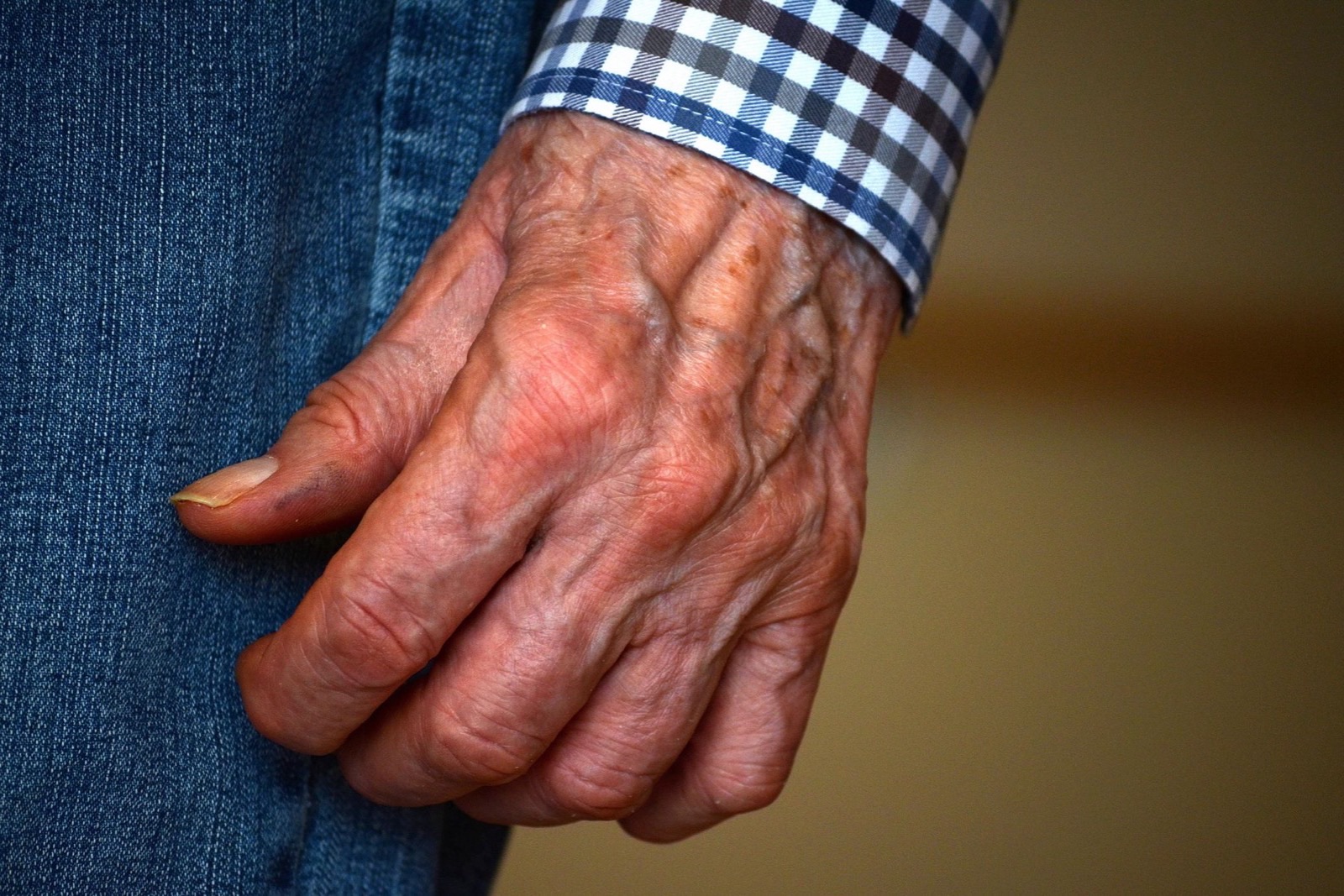
The skin of older adults is often dry, thin and prone to itching. This article summarizes the medical literature on how skin changes with age, the kinds of itching that warrant a medical visit, and daily care, including for skin that tears easily. It does not replace a medical examination: diagnosis and medicines are the doctor’s responsibility.
1. How the skin changes with age
A review by Wang et al. (2020), based on studies in both humans and mice, reports:
- The stratum corneum holds water less well: stratum corneum hydration peaks at around age 40 and then declines. Aged skin has less filaggrin and fewer of its breakdown products (components of natural moisturizing factor, NMF), less endogenous glycerol and fewer aquaporin 3 water channels.
- Fewer lipids: total stratum corneum lipids are more than 30% lower than in younger people, mainly because the epidermis synthesizes lipids less efficiently, especially cholesterol. Sebum also declines.
- The epidermis thins: epidermal cells proliferate more slowly and undergo more programmed cell death (apoptosis), making both the epidermis and the stratum corneum thinner.
- Surface pH rises: from about age 55, and markedly after age 70. The lipid-processing enzymes in the stratum corneum are suited to a pH of about 5, so a higher pH is thought to contribute to slower barrier recovery (the evidence that acidification speeds recovery comes mainly from mouse skin).
- Slower recovery: a damaged barrier recovers significantly more slowly than in younger people.
How the barrier is built is explained in our article on the skin barrier.
2. How common is dry skin in older adults?
| Study | Population | Dry skin |
|---|---|---|
| Völzer et al., 2023 | 314 care-dependent residents aged 65 and over (mean age 85.4) in 17 randomly selected nursing homes in Berlin, Germany; full-body examination by dermatologists | 95.9% (95% CI 93.6–97.8) |
| Lichterfeld-Kottner et al., 2018 | 923 home care recipients in Germany, median age 83 (21–104); recorded by nurses | 51.7% (95% CI 48.5–54.9) |
In the home care group, the areas most often dry were the distal parts of the arms and legs; men and people with limited mobility were affected more often; itching and incontinence-associated dermatitis were the two factors most strongly associated with dry skin (Lichterfeld-Kottner et al., 2018). Both studies were conducted in Germany; we have not found comparable data for Vietnam.
3. Itching in older adults: when to see a doctor
A review in JAMA by Berger et al. (2013) notes that itching is very common in older adults and, when severe, causes distress comparable to chronic pain; evidence for interventions to manage itching is still limited. More than half of older patients have dry skin, and the authors recommend that care for dry skin be part of the initial management of every older person with itching. However, the authors stress that skin, systemic and neurological causes must all be considered: some blood pressure medicines (calcium channel blockers, hydrochlorothiazide) are an important cause of itchy rashes — if a medicine is suspected, do not stop it on your own but ask the prescribing doctor; neuropathic itch can be localized (especially in the genital area) or widespread over the trunk (especially in people with diabetes); and scabies and bullous pemphigoid are more common in old age.
According to the NHS (the UK’s National Health Service), bullous pemphigoid is a rare condition, mainly affecting people over 60, that usually starts with an itchy, raised rash behind the knees, in the armpits, on the elbows, hands, feet or abdomen; a few weeks later small blisters may appear, but not everyone gets them. Do not pop the blisters yourself.
Checklist: see a dermatologist when
- Itching continues despite gentle bathing and regular moisturizing, especially generalized itching with no rash on the skin.
- An itchy rash has not cleared after a few weeks; there are blisters, blisters that keep coming back, or blisters containing pus or blood (NHS).
- Itching starts after taking a new medicine — tell the prescribing doctor, and do not stop the medicine on your own.
- People living in the same home or the same room are also itchy.
- The skin is painful, hot or swollen — this may be an infection (NHS).
4. Daily care: bathing, moisturizing, air and clothing
Most of the evidence comes from nursing homes: the Cochrane review by Cowdell et al. (2020) included 6 trials with 1,598 nursing home residents, none of them in a hospital, and rated the quality of the evidence as low or very low. In a randomized controlled trial by Hahnel et al. (2017), 133 residents aged 65 and over with dry skin (mean age 83.8) in 10 nursing homes in Berlin were divided into three groups; the assessors did not know the group allocation. The two intervention groups used a body wash and applied leave-on products twice a day for 8 weeks, while the control group received usual care. After 8 weeks, skin dryness in both intervention groups had decreased significantly compared with the control group; the lower legs were drier than the arms and trunk.
A systematic review by Lichterfeld-Kottner et al. (2020) covering 63 articles in people aged 50 and over found that syndet cleansers or amphoteric surfactants relieved dry skin better than soap and water; lipid-rich leave-on products containing humectants reduced skin dryness and itching; and products at pH 4 improved the barrier. The studies varied widely in design and measurement methods.
Daily care checklist
- Bathe in warm, not hot, water for a short time; pat dry gently with a soft towel (practical suggestion).
- Use a mild syndet cleanser instead of ordinary soap (Lichterfeld-Kottner et al., 2020).
- Apply moisturizer right after bathing while the skin is still slightly damp, twice a day as in the trials; focus on the lower legs, feet, forearms and backs of the hands.
- Avoid hot air blowing directly at the body; use a humidifier when the air is dry (see our article on dry skin and dehydrated skin).
- Wear soft, breathable fabrics such as cotton; keep fingernails short to reduce scratches from scratching (practical suggestion).
5. Thin skin that tears easily: recognizing it and gentle care
A skin tear occurs when thin skin is torn or peeled away after a bump, friction or a slight shearing pull. In nursing homes in Berlin, 10.5% of residents had a skin tear at the time of examination (Völzer et al., 2023).
In a cluster-randomized trial by Carville et al. (2014) in 14 aged care facilities in Western Australia (980 beds), residents in the intervention group had a commercially available, pH-neutral, fragrance-free lotion applied to their arms and legs twice a day for 6 months. The average monthly incidence of new skin tears was 5.76 per 1,000 occupied bed days, compared with 10.57 in the usual-care group — a reduction of almost 50%. The review by Lichterfeld-Kottner et al. (2020) also reports that formulations containing glycerin and petrolatum reduced skin tears.
In this trial, skin tears often occurred while residents were being moved in and out of bed or helped with bathing; the authors noted that beds, bed rails, chairs and wheelchairs were high-risk factors (Carville et al., 2014). General practical suggestions (not from a specific trial): support the person with the palm of your hand instead of grasping and pulling; wear long sleeves; pad the edges of the bed; and limit the use of adhesive tape on the skin. Once there is a tear, bleeding or signs of infection, management is for a nurse or health professional; do not apply cosmetics to open wounds.
6. Ingredients to look for in a moisturizer
| Ingredient | Role | Notes |
|---|---|---|
| Glycerin | Humectant | Aged skin has less endogenous glycerol; applying glycerol helps increase stratum corneum hydration (Wang et al., 2020) |
| Urea | Humectant; a component of NMF | Low concentrations for moisturizing; may sting on cracked skin — see our article on urea in cosmetics (in Vietnamese) |
| Ceramides with cholesterol and fatty acids | Replenish stratum corneum lipids | A mixture containing all three lipid classes helps the barrier recover faster in mice and in older adults (Wang et al., 2020) |
| Petrolatum | Occlusive | Suits very dry areas; slightly greasy and shiny — see our article on petrolatum in cosmetics (in Vietnamese) |
Fragrance-free formulas are preferable, like the lotion in the trial by Carville et al. (2014), and a new product should be tried first on a small area of skin.
ASEAN regulations: under Annexes II, III and VI (version 2026-1, June 22, 2026) and VII (version 2025-2), glycerin, urea and ceramides have no specific restriction entries; the entries containing the word “urea” are other substances. Petrolatum (CAS 8009-03-8) is in Annex II, Ref 904: “Petrolatum, except if the full refining history is known and it can be shown that the substance from which it is produced is not a carcinogen” — it may be used only when the full refining history is known and the substance from which it is produced can be shown not to be a carcinogen.
7. Formulation perspective
For skin care products for older adults, Butter-C’s formulation team balances humectants, barrier lipids and occlusives, and favors fragrance-free formulas with textures that spread easily. Phụ lục 03-MP (Appendix 03-MP) of Thông tư 06/2011/TT-BYT (Circular 06/2011/TT-BYT, Vietnam’s Ministry of Health circular on cosmetic product management) lists “preventing, reducing or reversing physiological changes and degeneration due to aging” among the claims not accepted for skin care products, so claims stop at “moisturizes, softens, helps the skin feel less dry and rough.” See our body lotion line.
Frequently asked questions
Is itching in older people always caused by dry skin?
No. Dry skin is very common, but medicines, systemic or neurological conditions, and skin conditions such as scabies or bullous pemphigoid can also cause itching (Berger et al., 2013). If the itching persists despite regular moisturizing, see a doctor.
How many times a day should moisturizer be applied?
The nursing home trials used twice a day (Hahnel et al., 2017; Carville et al., 2014). Apply it right after bathing; very dry areas can be given extra applications.
Can a moisturizer replace medicine prescribed by a doctor?
No. A moisturizer only helps keep dry skin moisturized; itching caused by a disease or by a medicine needs a doctor to find the cause and prescribe medicine if needed.
References
- Wang Z et al. Aging-associated alterations in epidermal function and their clinical significance. Aging (Albany NY). 2020. PMID 32217811
- Völzer B et al. Prevalence and associations of xerosis cutis, incontinence-associated dermatitis, skin tears, pressure ulcers, and intertrigo in aged nursing home residents: A representative prevalence study. Int J Nurs Stud. 2023. PMID 36898269
- Lichterfeld-Kottner A et al. Dry skin in home care: A representative prevalence study. J Tissue Viability. 2018. PMID 30487067
- Berger TG et al. Pruritus in the older patient: a clinical review. JAMA. 2013. PMID 24327039
- Hahnel E et al. The effectiveness of standardized skin care regimens on skin dryness in nursing home residents: A randomized controlled parallel-group pragmatic trial. Int J Nurs Stud. 2017. PMID 28214613
- Carville K et al. The effectiveness of a twice-daily skin-moisturising regimen for reducing the incidence of skin tears. Int Wound J. 2014. PMID 25040325
- Lichterfeld-Kottner A et al. Maintaining skin integrity in the aged: A systematic review. Int J Nurs Stud. 2020. PMID 31945604
- NHS. Bullous pemphigoid. https://www.nhs.uk/conditions/bullous-pemphigoid/
- Cowdell F et al. Hygiene and emollient interventions for maintaining skin integrity in older people in hospital and residential care settings. Cochrane Database Syst Rev. 2020. PMID 32006460