 BUTTER-C
Dry, cracked hands from frequent handwashing: causes and care
Washing your hands often is a necessary habit, but for people who must wash their hands dozens of times a day, the common price is dry, rough skin and cracks between the fingers. Understanding the mechanism helps you protect both hand hygiene and your skin.
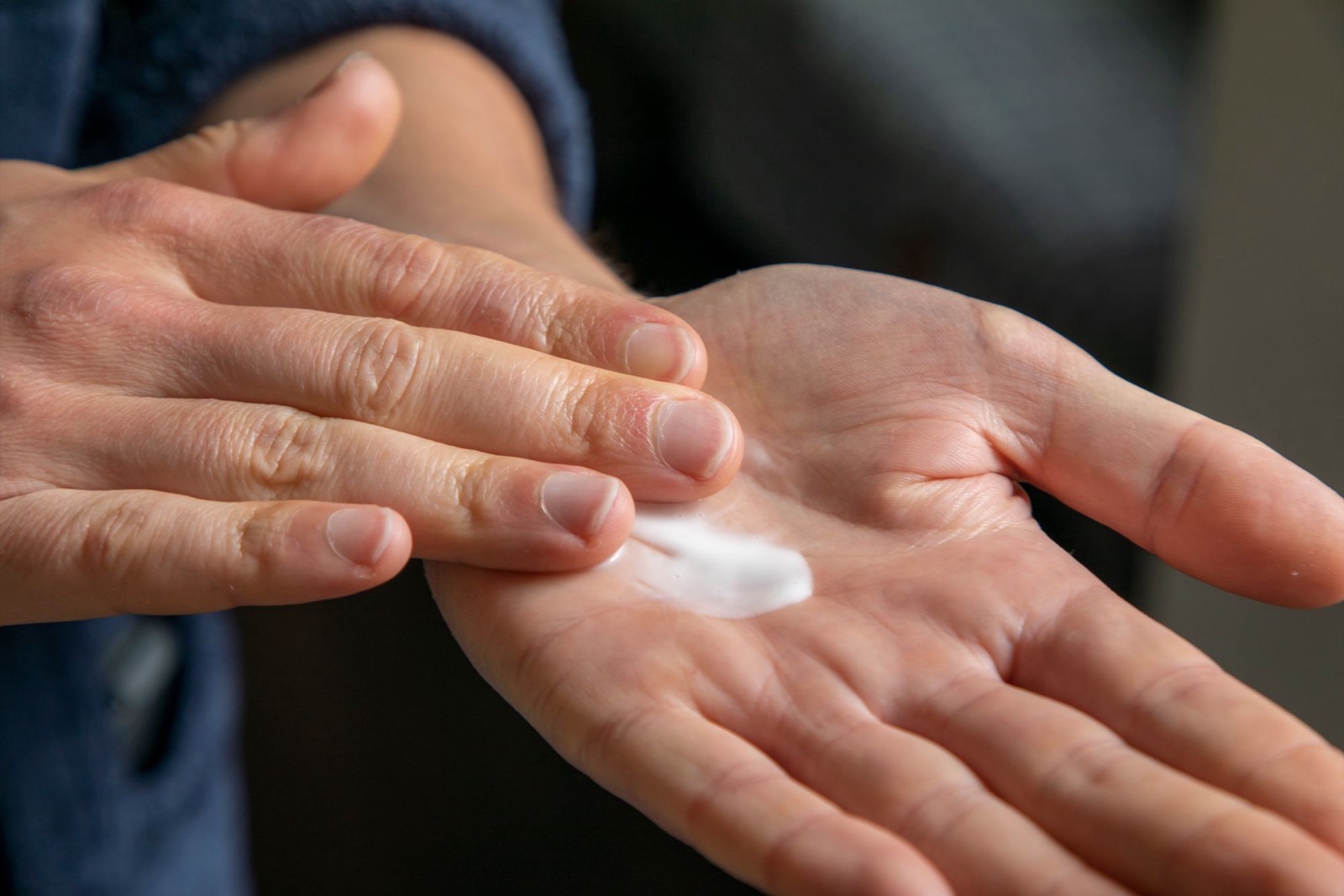
Dry, cracked hands from frequent handwashing are common among healthcare workers, kitchen workers, hairdressers, cleaners and people who do housework. Water, soap, detergents and gloves gradually weaken the skin’s protective barrier: the skin feels tight and sore, starts to scale, and then cracks between the fingers and at the fingertips. This article explains the mechanism, how to recognize hand dermatitis and how to care for the skin; diagnosis and medicines belong to the dermatologist.
1. Why frequent handwashing dries and cracks the skin of the hands
According to the World Health Organization’s guidelines on hand hygiene in health care (WHO, 2009), hand hygiene products denature stratum corneum proteins, alter intercellular lipids and reduce the ability of the stratum corneum to hold water. Most worrying is the depletion of barrier lipids, because detergents emulsify lipids and alcohols dissolve them. Frequent handwashing gradually depletes surface lipids, so detergents act more deeply; in the dry season and in people with dry skin, this process is faster. Hot water, dry air, not using hand cream, and friction when putting on and taking off gloves also contribute (WHO, 2009). DermNet classifies even water as an irritant. The structure of the stratum corneum is covered in our article on the skin barrier.
2. Hand dermatitis and occupational hand eczema
When dryness persists along with redness, itching and burning, it may already be hand dermatitis, also called hand eczema. DermNet describes acute episodes with red patches, swelling, blisters, oozing and cracked skin; in the chronic stage, the skin is dry, scaly and thickened. When the cause lies in a person’s work, it is occupational dermatitis, which is common in jobs involving wet work or contact with chemicals: cleaning, kitchen work, hairdressing, healthcare, housework, construction.
The irritant form usually starts between the fingers and then spreads to the backs of the hands and the wrists; contact allergy is suggested when the skin flares a few hours to a few days after a particular task, or when the rash has a border that matches the edge of rubber gloves (DermNet). See also our article on cosmetic contact dermatitis.
A meta-analysis by Quaade et al. (2021) of 66 studies in the general population (568,100 people) estimated the lifetime prevalence of hand eczema at 14.5% and the 1-year prevalence at 9.1%; women are affected 1.5–2 times more often than men. Among nurses, surveys compiled by the WHO (2009) recorded irritant contact dermatitis in 25–55%. Fungal infection of the hands or psoriasis can look similar (DermNet), so a dermatologist needs to make the diagnosis.
3. Soap or alcohol-based hand rub: which is gentler on the hands?
The WHO (2009) notes that frequent use of soap is associated with more skin dryness and irritation than some antiseptic preparations, and that alcohol-based hand rubs with added humectants are better tolerated by healthcare workers than soap.
- In nurses: in a randomized crossover trial by Boyce et al. (2000) with 32 nurses, lasting 6 weeks, 2 weeks of washing with soap raised the self-assessed irritation and dryness score from 2.0 to 4.8 (P < 0.0001) and significantly reduced the epidermal water content on the backs of the hands; during 2 weeks of using alcohol gel, this score decreased slightly from 2.72 to 2.0 (P = 0.08). A small study.
- In volunteers: Löffler et al. (2007) applied ethanol, 1-propanol and 2-propanol under test patches at concentrations from 60% up to undiluted (15 people per test): the skin barrier (measured as transepidermal water loss, TEWL) and redness did not change significantly, but skin hydration decreased significantly. Test washing with 80% ethanol was less irritating than test washing with 0.5% sodium lauryl sulfate. According to another paper from the same year on PubMed, co-author G. Kampf worked in the scientific department of a chemical company.
Why detergents irritate is explained in our article on sodium lauryl sulfate (in Vietnamese). Alcohol can still cause dryness; adding 1–3% glycerol or other skin-conditioning agents can reduce this effect (WHO, 2009). WHO recommendations for healthcare workers:
- Wash with soap and water when hands are visibly dirty or after using the toilet; in other care situations, prefer an alcohol-based hand rub.
- Do not wash with soap immediately before or after using an alcohol rub: it is unnecessary and can lead to dermatitis.
Do not give up hand hygiene for fear of dry skin. Dossier category: liquid handwashes and waterless hand gels that claim only to clean the hands can follow the cosmetic dossier route; products that claim hand antisepsis or are used in healthcare facilities belong to the category of household and medical-use preparations, which require separate registration, and are not cosmetics (see hand sanitizer gel).
4. Gloves: protecting your hands correctly
Ramsing and Agner (1996) had 19 volunteers wear occlusive gloves on healthy skin for 6 hours a day for 14 days: TEWL increased significantly compared with the hand without a glove. In a second experiment (18 people), a cotton glove worn underneath prevented this effect. This was a small study under experimental conditions; a 2018 Cochrane review found no eligible randomized trials on protective gloves (Bauer et al., 2018). Practical advice:
- Wear suitable gloves when washing dishes, doing laundry and cleaning; gloves should be clean, free of holes and not worn for too long; sweat under gloves makes dermatitis worse, and cotton-lined gloves are more comfortable (DermNet).
- Dry your hands thoroughly before putting on gloves: wearing gloves while the hands are still wet with water or alcohol increases the risk of irritation (WHO, 2009).
- Petroleum-based creams can damage latex gloves (WHO, 2009).
- Gloves do not replace hand hygiene (WHO, 2009).
5. Hand cream: when and how much
The WHO (2009) rates providing hand creams to healthcare workers to reduce irritant contact dermatitis caused by hand hygiene as category IA (strongly recommended, supported by well-designed studies); creams containing humectants, fats and oils help increase skin hydration and replenish barrier lipids. Evidence for prevention in the workplace is still limited: a Cochrane review of 9 randomized trials (2,888 workers) recorded irritant hand dermatitis in 13% of the groups using moisturizers versus 19% of the control groups (RR 0.71; 95% CI 0.46–1.09; 3 studies, 507 people), with low-quality evidence (Bauer et al., 2018). The lead author of the review declared having received lecture fees from manufacturers of skin care and skin protection products.
| Habit | How | Source |
|---|---|---|
| Before work or school | Apply a layer of thick cream | DermNet |
| After each handwash, when the skin feels dry again | Rinse well, dry, then reapply; up to 10–20 times a day | DermNet |
| Amount | The sources we read do not give a specific amount; apply enough to cover the backs of the hands, the palms, between the fingers and the fingertips | Practical suggestion |
| Keeping the cream clean | Creams are usually not sterile and are easily contaminated; do not top up a bottle that is partly used; tubes and pump dispensers are preferable | WHO, 2009; practical suggestion |
6. Ingredients to look for in a hand cream
| Group | Role | Examples |
|---|---|---|
| Humectants | Draw in and hold water in the stratum corneum | Glycerin, urea, panthenol |
| Emollients | Fill the gaps between the corneocytes | Shea butter, lanolin |
| Occlusives | Form a water-repellent film that reduces water evaporation | Petrolatum, waxes |
For products applied to the skin, fragrances and preservatives are the most common causes of contact allergy (WHO, 2009); when the skin of the hands is cracked and red, choose a fragrance-free cream with few ingredients.
ASEAN regulations: under Annexes II, III and VI (version 2026-1, June 22, 2026) and Annex VII (version 2025-2, December 12, 2025) of the ASEAN Cosmetic Directive, glycerin, urea, panthenol, shea butter (Butyrospermum Parkii Butter) and lanolin have no specific restriction entries. Petrolatum (CAS 8009-03-8) is listed in Annex II, Ref 904: it may be used only if its full refining history is known and it can be shown that the substance from which it is produced is not a carcinogen.
7. When to see a dermatologist
- The skin is still dry, sore and itchy even though you have reduced contact with water and detergents and moisturize regularly.
- Deep cracks, bleeding, pain; blisters, swelling, oozing.
- Pustules, crusting, increasing pain: hand dermatitis can become infected with staphylococci or streptococci (DermNet).
- The rash spreads to the forearms or the feet (DermNet).
- Flare-ups that follow a particular task or the edge of gloves: the doctor may order patch testing.
Medicine, if needed, is a prescription medicine prescribed by the doctor. According to DermNet, when it is managed carefully following the doctor’s advice, hand dermatitis usually recovers completely.
8. Formulation perspective
For hand creams for people who wash their hands often, the Butter-C formulation team balances the three ingredient groups above so that the moisturizing layer lasts through several washes yet still absorbs quickly. Claims stop at “moisturizes, helps keep hands soft and smooth”; Appendix 03-MP of Circular 06/2011/TT-BYT (Vietnam’s Ministry of Health circular on cosmetic product management) does not accept claims that target dermatitis or “reduce allergy” for skin care products. See our hand cream line.
Frequently asked questions
Does an alcohol-based hand rub dry the hands more than washing with soap?
In the studies we read, the opposite was true (Boyce et al., 2000; Löffler et al., 2007). When hands are visibly dirty, you still need to wash them with soap and water.
If an alcohol rub stings, does that mean I am allergic?
Not necessarily. The WHO (2009) notes that allergy to alcohol-based hand rubs is very rare, while skin already damaged by detergents is more easily irritated. If the stinging comes with itching or a long-lasting rash, see a dermatologist.
Can hand cream replace medicine prescribed by a doctor?
No. Hand cream only helps retain moisture; once hand dermatitis has developed, medicine is the doctor’s job.
References
- Quaade AS et al. Prevalence, incidence, and severity of hand eczema in the general population - A systematic review and meta-analysis. Contact Dermatitis. 2021. PMID 33548072
- Boyce JM et al. Skin irritation and dryness associated with two hand-hygiene regimens: soap-and-water hand washing versus hand antisepsis with an alcoholic hand gel. Infect Control Hosp Epidemiol. 2000. PMID 10926393
- Löffler H et al. How irritant is alcohol? Br J Dermatol. 2007. PMID 17578437
- Ramsing DW, Agner T. Effect of glove occlusion on human skin (II). Long-term experimental exposure. Contact Dermatitis. 1996. PMID 8730163
- Bauer A et al. Interventions for preventing occupational irritant hand dermatitis. Cochrane Database Syst Rev. 2018. PMID 29708265
- World Health Organization. WHO guidelines on hand hygiene in health care. 2009. https://www.who.int/publications/i/item/9789241597906
- DermNet. Hand dermatitis (hand eczema). https://dermnetnz.org/topics/hand-dermatitis