 BUTTER-C
Cracked heels: causes, care and when to see a doctor
Heel skin has a very thick stratum corneum, has no sebaceous glands and bears the body's weight with every step, so it easily dries out and then cracks. Most cases can be cared for at home; some signs, especially in people with diabetes, need to be seen by a health professional.
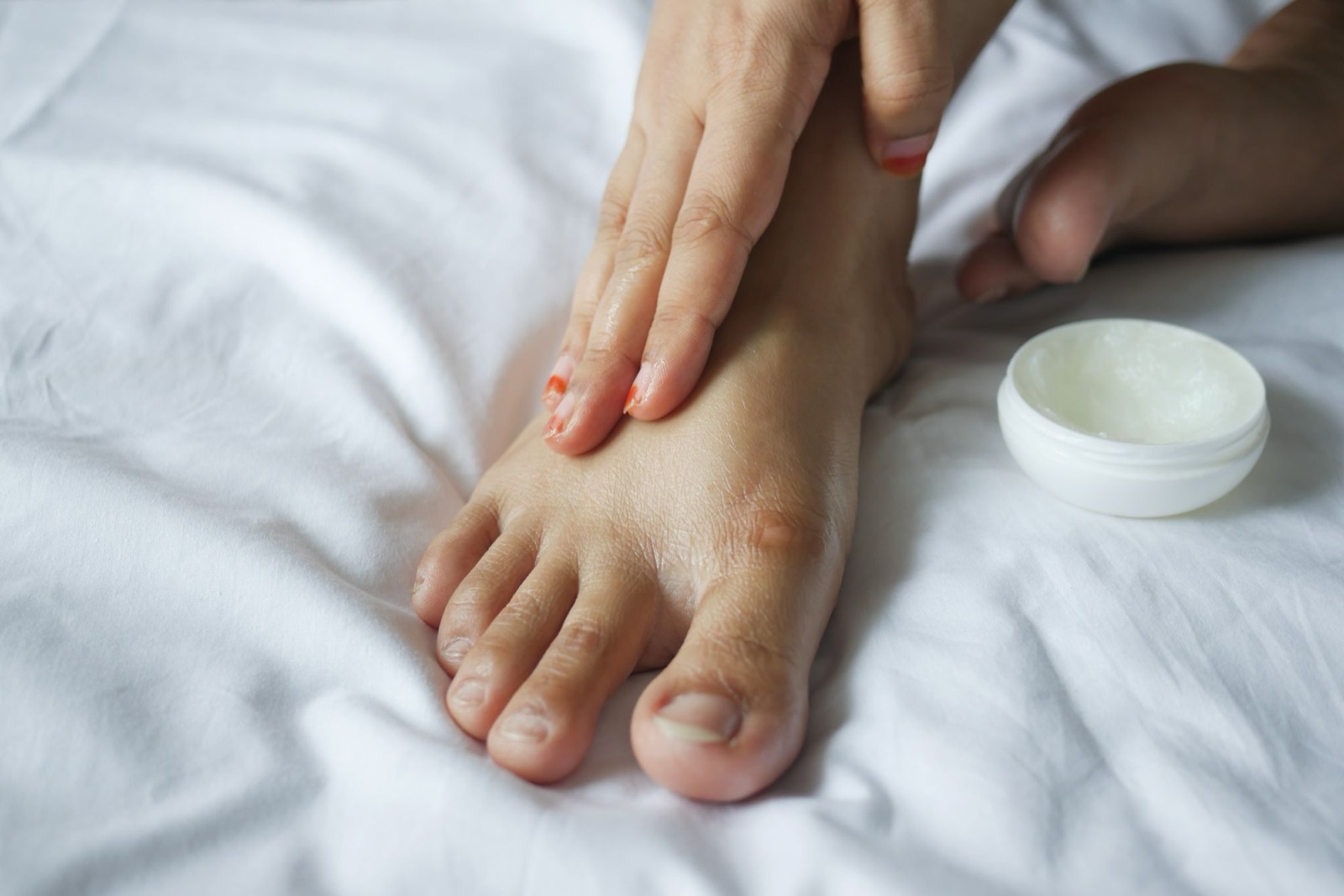
Cracked heels are very common: the skin around the rim of the heel thickens, becomes dry and hard, and then cracks. According to DermNet, most cases are only a nuisance and a cosmetic concern, but deep cracks can be painful when standing or walking and can even bleed. Cosmetics play only a supporting role in care; the section on diabetes is general medical information.
1. Why heel skin thickens and cracks easily
According to Tagami (2008), the hairless skin of the palms and soles has a very thick stratum corneum to withstand strong forces and friction, but its barrier function is very poor. The soles also have no sebaceous glands: sebaceous glands are found all over the body except the palms and soles (Smith and Thiboutot, 2008). See also the article the skin barrier.
According to DermNet, heel fissures start from a dry, thick callus around the rim of the heel. When weight is put on the heel, the fat pad under the heel bulges out to the sides, causing the less elastic callus to split.
| Factor | Effect | Source |
|---|---|---|
| Being overweight; standing for long periods, especially on hard floors | Increases pressure on the heel fat pad | DermNet |
| Open-back shoes, sandals | Do not hold the heel fat pad in place | DermNet |
| High heels, shoes of the wrong size; wearing shoes without socks | Pressure and rubbing that cause calluses | NHS |
| Older age | The fat padding on the soles becomes thinner, so calluses form more easily | NHS |
Long hot baths and harsh soaps make the skin even drier, as analyzed in the article dry skin and dehydrated skin.
2. When it is a sign of a medical condition
Besides dry skin, DermNet lists conditions that make heel fissures more likely: atopic dermatitis, juvenile plantar dermatosis, psoriasis (especially palmoplantar psoriasis), palmoplantar keratoderma, and systemic diseases such as diabetes and hypothyroidism. Athlete's foot (tinea pedis) also needs to be distinguished; the IWGDF classifies fungal foot infections among the problems that a health professional needs to manage in people with diabetes at risk of foot ulcers (Schaper et al., 2024). These conditions need to be diagnosed by a doctor; heel creams only help keep the skin moisturized.
Checklist: see a doctor if
- The cracks are deep, bleed or hurt when you stand or walk (DermNet).
- There is pus or discharge (NHS); cracks can become infected and lead to cellulitis (DermNet).
- The heels are badly cracked, or about a week of self-care has not helped (DermNet).
- You have diabetes, a circulation problem or a weakened immune system, or you are older: the NHS advises against dealing with calluses yourself.
- There is widespread scaling, itching, or lesions on other areas of skin: see a dermatologist to tell the conditions apart.
3. People with diabetes: foot care according to medical guidelines
Medical context. DermNet notes that diabetic nerve damage reduces sensation in the feet, and cracks can lead to ulcers. According to the practical guidelines of the International Working Group on the Diabetic Foot (IWGDF, 2023), when a foot has lost protective sensation or is deformed, areas under high pressure thicken into calluses; the callus in turn increases the load and can cause bleeding under the skin and then ulceration (Schaper et al., 2024). The IWGDF gives the following guidance for people at risk:
- Inspect your feet every day, including between the toes; tell a health professional about any blisters, cuts, scratches or ulcers.
- Wash your feet daily in water below 37 °C and dry carefully between the toes; do not warm your feet with a heater or a hot-water bottle.
- Do not use chemicals or plasters to remove corns and calluses; see an appropriate health professional.
- Use emollients for dry skin, but do not apply them between the toes.
- Do not walk barefoot or in socks only, even indoors.
For this reason, people with diabetes should not cut away calluses themselves or use foot peel socks or acid products on their own to remove calluses, and should see a doctor early if a crack bleeds or shows signs of infection.
4. Everyday heel care
DermNet considers prevention an effective approach: apply moisturizer regularly. Heel creams often contain keratolytic agents or humectants such as urea, salicylic acid, alpha-hydroxy acids (AHAs, for example lactic acid) and saccharide isomerate (DermNet). Occlusives such as petrolatum (in Vietnamese) form a film that limits water evaporation from the stratum corneum; emollients such as lanolin and shea butter help make the skin surface softer. Urea up to 10% acts mainly as a moisturizer; above 10%, it has a keratolytic effect and can cause burning on damaged skin; for sources, see the article urea in cosmetics (in Vietnamese).
Home-care checklist (for people without diabetes or a foot condition)
- Check your heels daily; when the cracks are still small, apply cream 2–3 times a day (DermNet).
- Soak in warm water to soften calluses, rub gently with a pumice stone or foot file, then apply cream (NHS, DermNet).
- Do not cut calluses yourself with scissors or razor blades (NHS, DermNet).
- Wear thick, cushioned socks and well-fitting shoes with soft soles, possibly with added heel pads (NHS); limit open-back footwear (DermNet).
- Do not apply acid products to open cracks; stop if stinging persists.
5. Evidence for foot creams containing urea and lactic acid
Dry skin on the feet in general. The systematic review by Parker et al. (2017) included 22 studies; urea was the most studied (14), followed by ammonium lactate, a salt of lactic acid (7). Methodological quality was poor to moderate, so no active ingredient could be recommended over another: limited evidence.
People with diabetes (medical context). The meta-analysis by Borgström et al. (2026) included 12 randomized trials in people with diabetes who had dry skin on the feet without ulcers. Base creams with added active ingredients (most commonly humectants) reduced dryness more than the base cream alone after 2 and 4 weeks (moderate certainty); urea-containing creams were more effective than the base cream after 4 weeks (high certainty); adverse events were rare and mild. Long-term trials on ulcer risk are still lacking.
A trial with industry-affiliated authors. In the study by Gin et al. (2017), 4 of the 6 authors worked at a company's research institute. 167 people with diabetes who had deep open cracks on the heel used either a test cream containing urea, glycerin and petrolatum or a placebo cream for 4 weeks. The rate of complete healing of the target crack was 46.3% versus 33.3%, which was not statistically significant (P = 0.088); the proportion still having a deep open crack after 4 weeks was 6.4% versus 24.1%. The results belong to the whole formula, are a medical context and are not a basis for cosmetic claims. A trial of a cream with 10% urea combined with 4% lactic acid is summarized in the urea article cited above. Trials are usually short (2–4 weeks); there are still few data comparing concentrations or comparing urea with lactic acid.
6. Common misconceptions
| Misconception | Reality |
|---|---|
| “Cracked heels are just a cosmetic issue” | Deep cracks can bleed and become infected; in people with diabetes they can lead to ulcers (DermNet) |
| “The higher the urea concentration, the better” | There is not enough basis to rank active ingredients or formulas (Parker et al., 2017) |
| “Soak in hot water for a long time to soften the skin” | Hot water makes the skin even drier (dry skin article); people with diabetes need water below 37 °C (IWGDF) |
7. Formulation and regulatory perspective
- Urea: has no entry of its own in ASEAN Annexes II, III, VI (version 2026-1) or VII (version 2025-2), so there is no concentration limit; the entries containing the word “urea” are other substances.
- Lactic acid: Annex III Ref A6, skin products “(i) For general use”: “≤ 10% total when calculated as the acids”, “Final formulation ≥ pH 3.5”; the “> 10% - 20%” level is only for “(ii) For professional use”. The warning “Sunburn alert: This product contains an alpha hydroxy acid (AHA)…” is mandatory when glycolic and/or lactic acid is at 2.5% or more and the product does not contain a sunscreen; footnote (13) exempts products used on skin areas not exposed to the sun, and whether heel creams qualify for this exemption is pending confirmation by regulatory staff. Entry A6 covers only glycolic acid, lactic acid and their salts and simple esters (including sodium lactate), and also applies to foot peel socks containing these substances.
- Salicylic acid: Annex III Ref 98, maximum 2.0% for group (b) and 0.5% for group (c) “Body lotion, eye shadow, mascara, eyeliner, lipstick, roll-on deodorant, nail polish”; “Not to be used in preparations for children under three years of age.” Butter-C reads this strictly: leave-on body creams are classified under group (c), pending confirmation by regulatory staff.
- Claims: under Appendix 03-MP (Phụ lục 03-MP) of Circular 06/2011/TT-BYT (Thông tư 06/2011/TT-BYT, Vietnam's Ministry of Health circular on cosmetic product management), cosmetics must not be presented as products for preventing or intervening in disease; information targeting “a certain group of people and/or people with special lesions” also needs careful review, and “kills fungus” is among the examples of unacceptable claims. Labels should stop at “softens thickened skin on the heels” and “moisturizes dry, rough feet”; Butter-C advises avoiding drug-like language about cracks and athlete's foot, as well as the phrase “for people with diabetes” (this is Butter-C's cautious reading; the Appendix does not mention this phrase).
When manufacturing heel cream, Butter-C combines humectants, keratin-softening agents and occlusives at the levels the brand chooses, monitors pH and odor from urea breakdown, and labels the product not to be used on bleeding cracks or open wounds.
Frequently asked questions
How long does it take for cream to make the heels softer?
Trials usually assess results after 2 and 4 weeks. If the heels are badly cracked or about a week of self-care has not helped, DermNet advises seeing a foot care specialist.
Can people with diabetes use heel creams?
The IWGDF encourages the use of emollients for dry skin, except between the toes. Calluses, bleeding cracks or signs of infection need to be seen by a health professional; ask a doctor before using products containing acids.
Can foot peel socks be used?
The solution in the socks contains acids; if these are glycolic or lactic acid, they must comply with ASEAN Annex III Ref A6 (section 7). We have not found any controlled trials: limited evidence. Do not use them when the heels have open cracks; people with diabetes should not use them on their own.
References
- Tagami H. Location-related differences in structure and function of the stratum corneum with special emphasis on those of the facial skin. Int J Cosmet Sci. 2008. PMID 19099543
- Smith KR et al. Thematic review series: skin lipids. Sebaceous gland lipids: friend or foe? J Lipid Res. 2008. PMID 17975220
- Parker J et al. Moisturisers for the treatment of foot xerosis: a systematic review. J Foot Ankle Res. 2017. PMID 28191040
- Borgström K et al. Moisturizer formulations for diabetic foot xerosis: a systematic review and meta-analysis of randomized controlled trials. Front Clin Diabetes Healthc. 2026. PMID 42755659
- Gin H et al. Treatment by a moisturizer of xerosis and cracks of the feet in men and women with diabetes: a randomized, double-blind, placebo-controlled study. Diabet Med. 2017. PMID 28627029
- Schaper NC et al. Practical guidelines on the prevention and management of diabetes-related foot disease (IWGDF 2023 update). Diabetes Metab Res Rev. 2024. PMID 37243927
- DermNet. Cracked heel. https://dermnetnz.org/topics/cracked-heel
- NHS. Corns and calluses. https://www.nhs.uk/conditions/corns-and-calluses/