 BUTTER-C
Isopropyl palmitate (IPP) in cosmetics: role, acne, safety
Of the 237 alkyl esters assessed by CIR, isopropyl palmitate ranks third by number of reported formulations (1,125, FDA data from 2013), behind only ethylhexyl palmitate and isopropyl myristate. IPP is often lumped together with IPM as “pore-clogging”. This article separates the data that actually exist for IPP from what is inferred from its sister compound.
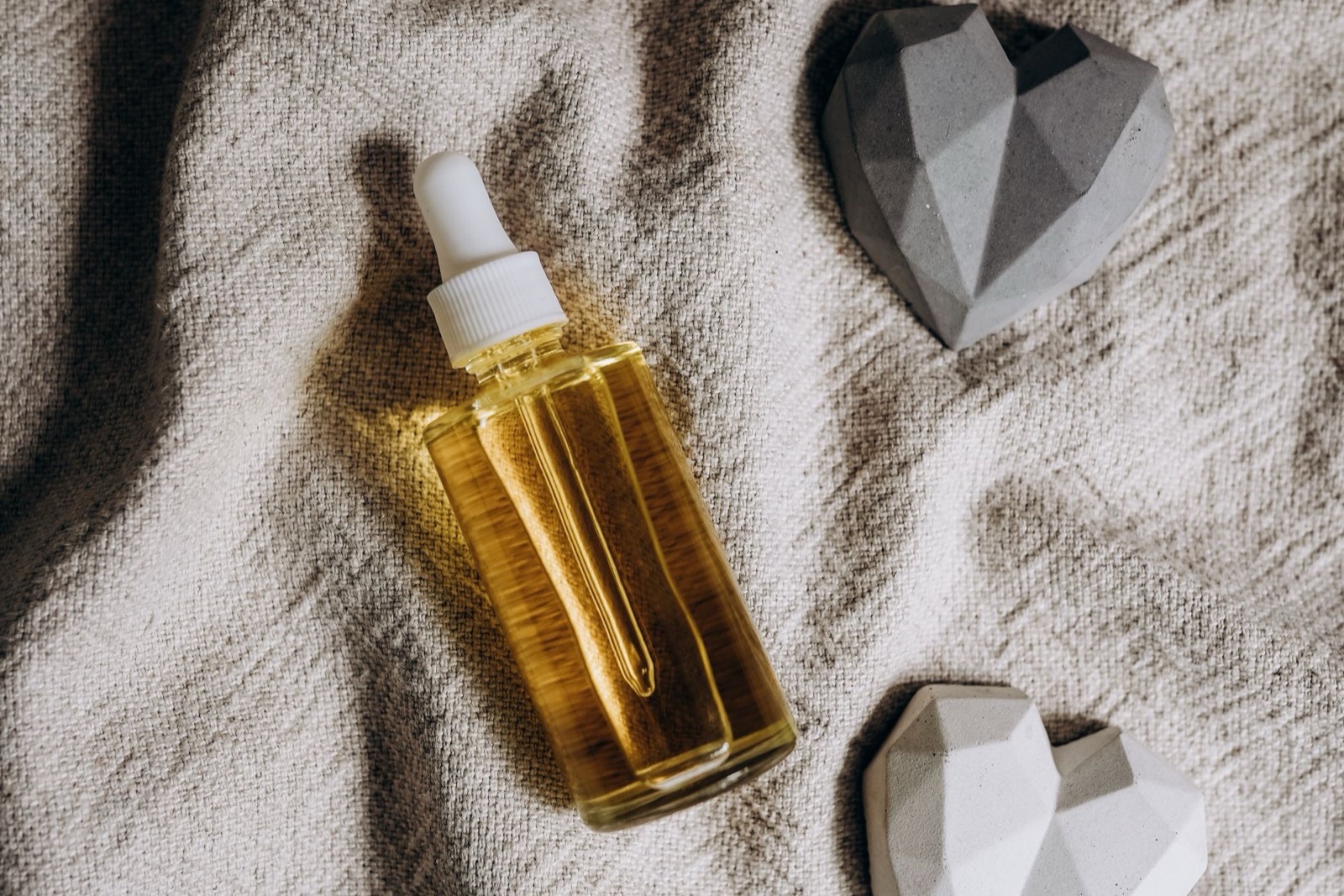
Isopropyl palmitate (INCI: Isopropyl Palmitate, abbreviated IPP) is the ester of isopropanol (isopropyl alcohol) with palmitic acid, a saturated 16-carbon fatty acid. It is a mobile, colorless, almost odorless liquid; in cosmetics, IPP serves mainly as an emollient, a spreading agent and a solvent for oil-soluble ingredients.
IPP is structurally very close to isopropyl myristate (IPM) (in Vietnamese); this article focuses on the data specific to IPP and does not repeat the general points already covered for IPM.
1. What is isopropyl palmitate?
According to PubChem (CID 8907), IPP has the IUPAC name propan-2-yl hexadecanoate, the formula C19H38O2, a molecular weight of 298.5 g/mol and CAS No. 142-91-6. The 1982 report of the (US) CIR Expert Panel describes the material used in cosmetics as a liquid mixture of isopropyl esters in which IPP makes up at least 60%, the remainder being isopropyl laurate, myristate, pentadecanoate, heptadecanoate and stearate — because technical-grade palmitic acid is itself a mixture of fatty acids. IPP is soluble in acetone, alcohol, mineral oil, castor oil and cottonseed oil; insoluble in water, glycerin and propylene glycol; its melting point is about 11 °C.
According to CIR 1982, palmitates are prepared by acid-catalyzed esterification of an alcohol with palmitic acid; as saturated esters, they are not expected to autoxidize readily, but they can be hydrolyzed to palmitic acid and isopropanol.
2. How does IPP differ from IPM?
| Criterion | IPP | IPM |
|---|---|---|
| Fatty acid | Palmitic acid (C16) | Myristic acid (C14) |
| Formula; molecular weight (PubChem) | C19H38O2; 298.5 g/mol | C17H34O2; 270.5 g/mol |
| XLogP (PubChem, computed value) | 8.2 | 7.2 |
| Number of formulations reported to the FDA in 2013 (CIR 2013) | 1,125 | 1,182 |
| Maximum reported concentration, 2012 survey (CIR 2013) | 60% | 77.3% |
| CIR assessments before the alkyl ester report | 1982 (together with octyl and cetyl palmitate); reaffirmed 2005 | 1982; 2010 (myristic acid group) |
| Rabbit ear | Positive (Fulton 1984; Nguyen 2007) | Positive (same two sources) |
We have not found any study directly comparing the skin feel or tolerability of IPP and IPM in humans; the choice between them should be based on sensory and stability testing in the actual formula.
3. What does IPP do in a formula?
CIR 1982 lists IPP as a physical stabilizer in stick antiperspirants, and as an emollient, emulsifier, film former, spreading agent and solvent in creams, lotions and eye makeup. The function list cited in CIR 2013: skin conditioning – emollient, binder, fragrance ingredient.
In contract manufacturing, liquid esters such as IPP or coco-caprylate/caprate often replace part of the butters and vegetable oils to make body butters less heavy (formulation experience); in creams, IPP goes into the oil phase together with fatty alcohols such as cetearyl alcohol (in Vietnamese).
Evidence of efficacy: in the PubMed abstracts we searched (November 24, 2026), we found no clinical trial measuring the emollient or moisturizing effect of IPP on its own — limited evidence. A “light, fast-absorbing” feel needs to be checked on the finished product by a sensory panel.
4. Reported concentrations
The CIR data are compiled from reports to the FDA and surveys by the US industry association — these are reported concentrations, not recommended levels. In 1976 (CIR 1982), IPP was most often used in the >1–5% range, was also frequently found in the >25–50% range, and the maximum was >50%. Data for 2012–2013 (CIR 2013):
| Use category | Number of formulations (FDA 2013) | Reported concentrations (2012 survey) |
|---|---|---|
| Total | 1,125 (2001: 535) | 0.0001–60% |
| Leave-on | 995 | 0.0001–60% |
| Rinse-off | 104 | 0.0003–31% |
| Eye area | 81 | 0.1–34% |
| Possible ingestion (e.g., lipstick) | 107 | 1–34% |
| Mucous membrane contact | 153 | 0.05–34% |
| Underarm deodorants | 16 | 0.5–17% (non-spray) |
| Baby products | 4 | 2–11% |
5. Does IPP cause acne? Reading the rabbit ear data correctly
The “pore-clogging” label attached to IPP comes from the rabbit ear model. Fulton et al. (1984) placed IPM “and its analogs”, including IPP, among comedogenic ingredients, while also calling the rabbit ear a less than ideal model. Nguyen et al. (2007) tested 14 ingredients on the rabbit external ear canal: IPP was one of the 9 substances rated positive (see comedogenic cosmetics and comedogenicity ratings).
Limitations when extrapolating to humans:
- Mills and Kligman (1982), a one-month occlusive model on the human back: the rabbit ear is more sensitive than human skin; substances that are weakly comedogenic in the rabbit ear are probably safe for human use, possibly with the exception of acne-prone individuals.
- The abstracts of the two rabbit ear studies do not give the concentration, test vehicle or individual score for IPP.
- There are no human comedogenicity data for IPP specifically: a PubMed search (November 24, 2026) for “isopropyl palmitate” combined with comedo*/acne returns only the two rabbit ear studies above; the 1982 CIR report on IPP has no section on comedogenicity.
There is therefore no basis for labeling a product “acne-causing” or “does not cause acne” from the name IPP alone. The rabbit ear result is a signal to test early in leave-on products for oily, acne-prone facial skin; the claim “non-comedogenic” should be used only when the finished product itself has been tested in humans.
6. Penetration enhancement: data mostly from the laboratory
CIR 2013 notes that IPP has been reported for use in topical preparations as an enhancer of penetration through the lipid layer. None of the data we were able to read were obtained in living humans:
- Guo et al. (2006), in vitro on excised rat skin (Franz cells): pretreating the skin with 5–20% IPP solutions in ethanol significantly increased the flux and the amount permeated for all four model drugs (oxaprozin, nimesulide, gliclazide, ribavirin); the effect ranked 20% > 15% > 10% > 5% and was related to the lipophilicity of the permeant.
- CIR 1982: small, polar alcohols penetrated human abdominal skin (cadaver) in a diffusion cell faster when applied in a nonpolar solvent such as IPP than when applied in saline.
CIR (2013) advises caution when combining alkyl esters with ingredients whose safety is based on their not being absorbed through the skin. Rat skin differs from human skin, and an ethanol solution differs from a moisturizing cream — do not claim “delivers actives deep into the skin” on the basis of IPP.
7. Safety: irritation and allergy
CIR conclusions. In 1982: “Octyl Palmitate, Cetyl Palmitate, and Isopropyl Palmitate are safe as cosmetic ingredients in the present practices of use and concentration”; the conclusion was reaffirmed in 2005. The report on 237 alkyl esters (final version 2013, published in a journal in 2015, including IPP): “safe in the present practices of use and concentration described in this safety assessment when formulated to be non-irritating”.
| Human test | Result | Source |
|---|---|---|
| 24-hour occlusive patch, undiluted IPP, 160 subject tests in total (3 studies) | 5 irritation scores of 0.5/4, all others 0 | CIR 1982 |
| 3-week repeated patch followed by challenge (RIPT), undiluted IPP, 102 subjects | Barely perceptible erythema in 3 subjects after the second application; not sensitizing | CIR 1982 |
| Bath oil containing 45.6% IPP: 10-day irritation (10 subjects), maximization (25), phototoxicity (10), photoallergy (25) | No reactions observed | CIR 1982 |
| 48-hour patch, 151 volunteers, IPP as the comparator | Mild irritation (erythema only) in 2 subjects (1.3%) | Dreher 1996 |
| 21-day cumulative irritation, 20 subjects | Time until 50% of subjects showed irritation (IT50): 17 days for IPP, compared with 13 and 14 days for the two lecithin preparations | Dreher 1996 |
| Cream containing 10% IPP, tested on scarified skin (chamber scarification), 20 subjects | Well tolerated; the difference from the negative control (paraffin oil) was not statistically significant | CIR 2013 |
Animal data. In rabbits, undiluted IPP was non-irritating to slightly irritating (CIR 1982). A cream containing 10% IPP caused moderate irritation in hairless guinea pigs but was well tolerated in humans (CIR 2013) — animal models may be more sensitive than humans.
Contact allergy. PubMed lists one case report (Lazzarini, 1982) of contact allergy to benzyl alcohol and IPP in a topical corticosteroid medication (no abstract — cited by title only). We have not found patch test data from patient series for IPP, so no rate is given.
Who should take care: people who have had a positive patch test to IPP; people with oily, acne-prone skin using leave-on facial products (test on a small area). Pregnant or breastfeeding women: data are insufficient; consult a doctor.
8. Perspective for brand owners
| Substance | ASEAN Annexes (II, III, VI version 2026-1; VII version 2025-2) |
|---|---|
| Isopropyl palmitate (CAS 142-91-6) | Not listed in Annexes II, III, VI or VII — searched by name, “palmitate”, “hexadecanoate” and CAS |
- Quality: commercial IPP is a mixture of esters — request a COA showing the ester composition (GC), acid value and iodine value (cited in CIR 1982: both max. 1.0), and ester value (182–191).
- Origin: CIR 2013 notes that some alkyl esters may be made from acids or alcohols of plant or animal origin (including animal fat) — vegan and halal lines need the supplier to declare the origin of the palmitic acid.
- Cold storage: the melting point is about 11 °C — below this temperature the material may solidify (inference); warm it and mix well before weighing.
- Claims: suitable: “softens the skin”, “light, easy-spreading texture” (once sensory-tested). Avoid “does not cause acne”, “does not cause allergies”, “delivers actives deep into the skin”.
Butter-C uses isopropyl palmitate in some contract-manufactured body formulas, such as a buttercream-textured body butter, to reduce greasiness; for facial products for oily skin, the team may propose a different emollient and test tolerance on the finished product.
Frequently asked questions
Is isopropyl palmitate toxic?
No. CIR concluded that IPP is safe in the present practices of use (1982, reaffirmed 2005; 2013 group report: when formulated to be non-irritating).
Does IPP clog pores?
IPP is positive in the rabbit ear model, which is more sensitive than human skin; we have not found human data for IPP specifically. People prone to breakouts should first try leave-on facial products on a small area.
IPP or IPM: which is gentler?
There is no direct comparative study in humans; assess on the finished product.
Can pregnant women use products containing IPP?
Human data are insufficient; consult a doctor.
References
- Elder RL (ed). Final Report on the Safety Assessment of Octyl Palmitate, Cetyl Palmitate and Isopropyl Palmitate. J Am Coll Toxicol. 1982;1(2):13-35. Reprinted in CIR — Alkyl Esters Re-review, Supplement Book 1 (2012)
- Cosmetic Ingredient Review. Amended Safety Assessment of Alkyl Esters as Used in Cosmetics (Final Amended Report, April 12, 2013). https://www.cir-safety.org/sites/default/files/alkyle032013rep.pdf · Fiume MM et al. Safety Assessment of Alkyl Esters as Used in Cosmetics. Int J Toxicol. 2015. PMID 26362120
- Fulton JE Jr et al. Comedogenicity of current therapeutic products, cosmetics, and ingredients in the rabbit ear. J Am Acad Dermatol. 1984. PMID 6229554
- Nguyen SH et al. Comedogenicity in rabbit: some cosmetic ingredients/vehicles. Cutan Ocul Toxicol. 2007. PMID 18058303
- Mills OH Jr, Kligman AM. A human model for assessing comedogenic substances. Arch Dermatol. 1982. PMID 7138047
- Dreher F et al. Human skin irritation studies of a lecithin microemulsion gel and of lecithin liposomes. Skin Pharmacol. 1996. PMID 8722607
- Guo H et al. Effects of isopropyl palmitate on the skin permeation of drugs. Biol Pharm Bull. 2006. PMID 17077540
- Lazzarini S. Contact allergy to benzyl alcohol and isopropyl palmitate, ingredients of topical corticosteroid. Contact Dermatitis. 1982. PMID 6216057