 BUTTER-C
Shaving and skin irritation: razors, shaving gel, aftercare
A razor blade cuts the beard but also touches the outermost layer of the skin. Shaving in the direction of hair growth, using shaving gel, changing blades on time and choosing a gentle aftershave product help reduce much of the discomfort; if razor bumps persist or leave scars, see a dermatologist.
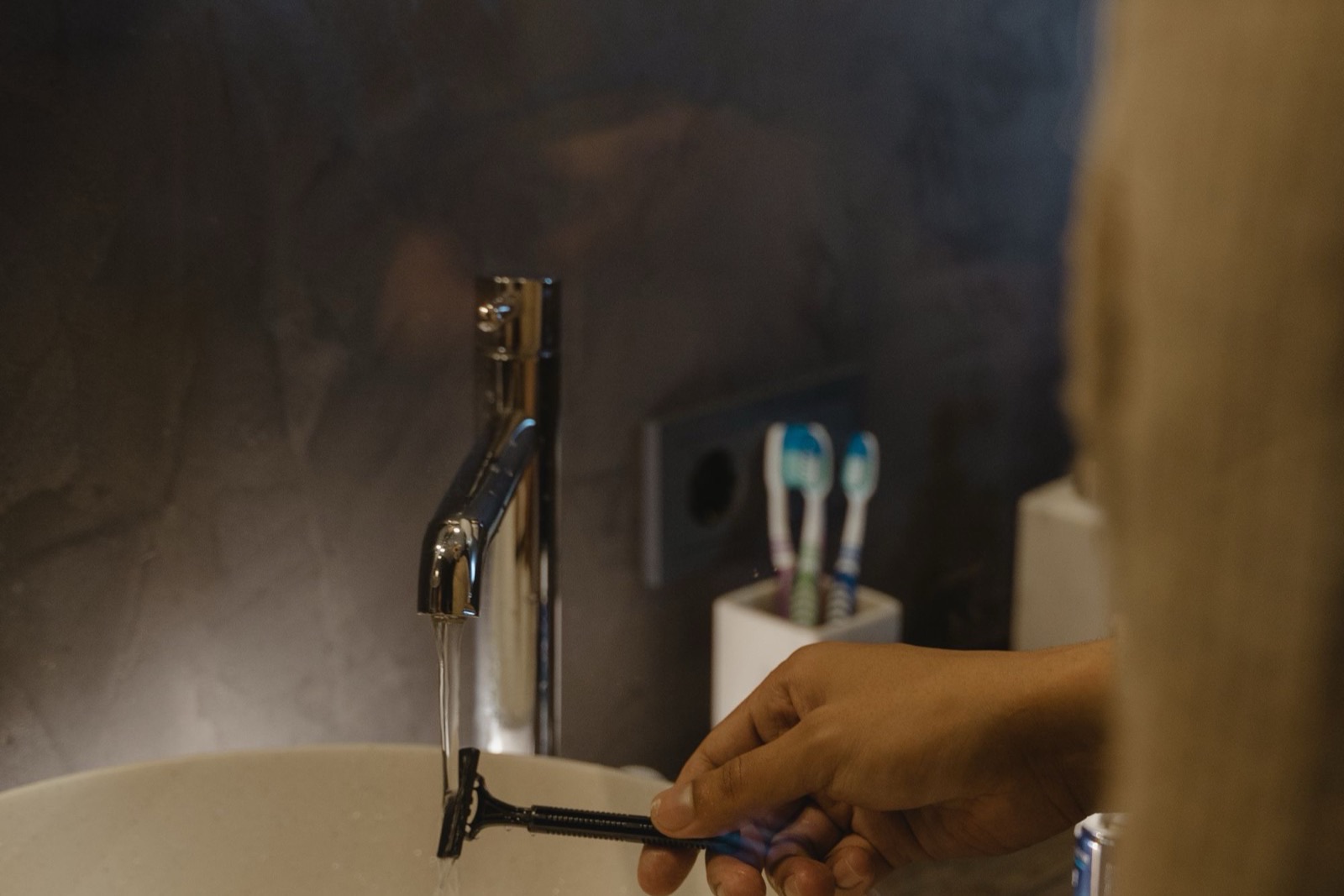
Burning, redness and small bumps after shaving are familiar to many men. Shaving and skin irritation are linked because the blade not only cuts the beard hair but also acts on the outermost layer of the skin. Most of the discomfort can be reduced with correct shaving technique, shaving gel and suitable aftershave products.
This article explains how shaving affects the skin, how to recognize razor bumps, shaving technique and signs that you should see a doctor. Diagnosis and prescription medicines belong to the doctor; cosmetics only support skin care.
1. How shaving affects the skin
According to DermNet, shaving is generally safe when done correctly, but it can cause itching, small cuts, razor burn, pustules due to folliculitis and ingrown hairs. DermNet classifies razor burn as irritant contact dermatitis, meaning that the skin is damaged directly, not that it is an allergy. The blade can also remove part of the top layer of the skin; one role of shaving cream is to add an extra layer to limit this (DermNet).
The review by Maurer et al. (2016) reports that beard hairs have high density, thickness and stiffness, often have an elliptical cross-section and grow at a low angle close to the skin. Because beard hair is hard to cut, people who shave tend to press hard and pass the razor several times, two habits that increase irritation. The skin around the hair follicles is rich in blood vessels, nerves and immune cells, so it reacts quickly to mechanical stimulation. Two of the four authors work for a manufacturer of shaving devices.
2. Razor bumps: recognize them early
Pseudofolliculitis barbae (“razor bumps”) is an inflammatory reaction around hair follicles; it is most common on the face as a result of shaving, but it can occur in any area that is shaved or plucked (DermNet). A hair that has been cut close has a sharp tip; as it grows back, it pierces back into the skin or through the wall of the follicle, and the skin reacts as it would to a foreign body (DermNet; Ogunbiyi, 2019).
- Skin-colored or red papules around hair follicles that look like acne, often below the jawline, where the beard grows in several directions.
- Itching or pain; the bumps may bleed when the razor passes over them.
- After the bumps heal, dark marks or scars may remain, including keloids (DermNet).
DermNet notes that the condition mainly affects men of African descent, is linked to tightly curled, coarse beard hair, and is more common in people who use razors than in people who use electric shavers. Ogunbiyi (2019) reports that the condition is more common in men of African and Asian descent; the author declared receiving payment from a consumer goods company. The American Academy of Dermatology (AAD) says that the condition is particularly common in men with darker skin.
Bacterial folliculitis in the beard area looks similar and can occur at the same time (DermNet); see our article on folliculitis and back acne.
3. Shaving technique recommended by dermatologists
| Step | What to do | Source |
|---|---|---|
| Before shaving | Wet the skin and beard to soften them; this is most convenient right after a shower. Wash the face with a gentle cleanser. | AAD; DermNet |
| Shaving cream or gel | Always apply it and leave it on the skin for a few minutes; people with sensitive skin should choose a gentle product. Do not use soap instead of shaving cream. | AAD; DermNet |
| Shaving direction | In the direction of hair growth. Shaving against the grain gives a closer shave but makes burning and razor bumps more likely. | AAD; DermNet |
| Pressure | Do not stretch the skin; use short, light strokes; do not pass the razor more than twice over the same area. | AAD; DermNet |
| Rinsing the blade | Rinse the blade after each stroke. | AAD; DermNet |
| Changing blades | Change the blade, or throw away a disposable razor, after 5–7 shaves; dull blades increase the risk of razor bumps. | AAD |
| After shaving | Rinse off the cream, wash with cool water or apply a cool towel, then apply a moisturizing product. | AAD; DermNet |
| Storing the razor | Let the razor dry in a dry place, not in the shower. | AAD |
The AAD advises people prone to razor bumps to use a mirror to work out which direction their beard grows in, and not to pluck the hair out of a swollen bump; people with acne should shave gently and not shave over pimples.
4. What shaving gels and foams do
According to DermNet, shaving cream keeps the skin moist, softens beard hairs so they are easier to cut and forms a cushioning layer on the surface; shaving cream is less irritating and more moisturizing than soap. In the sources we read, we found no evidence that any one format — gel, foam or cream — is clearly superior.
5. After shaving: soothing, alcohol and fragrance
DermNet recommends finishing with cool water and a moisturizing product to rehydrate the skin. The AAD recommends using a gentle aftershave product, and if a product causes burning or stinging, stop using it and switch to another product.
Volatile alcohol. Classic aftershave lotions contain a lot of volatile alcohol (Alcohol, Alcohol Denat.), which feels cool and dries quickly. This is a different group from fatty alcohols (see our article on the fatty alcohol cetearyl alcohol (in Vietnamese), which includes a section of data on ethanol on intact skin). Many people feel stinging when they apply a lotion high in alcohol to freshly shaved skin, but we have not found a study that measures this specific situation: limited evidence. People who shave every day or have sensitive skin can choose an alcohol-free or low-alcohol balm or gel.
Menthol creates a cooling sensation by activating cold receptors; it does not make the skin colder (see our article on menthol in cosmetics (in Vietnamese)).
Fragrance. According to the review by de Groot (2020), up to 4.5% of adults in the general population may be allergic to fragrance materials; among consecutive patients patch tested for suspected contact dermatitis, the rate may reach 20–25%. Aftershave products, together with deodorants and perfumes, are often sources of sensitization. How to tell irritation from allergy, and the role of patch testing, are covered in our article on cosmetic contact dermatitis. People who have reacted before should favor fragrance-free products.
6. Is men’s skin different?
The review by Rahrovan et al. (2018) of 57 studies found that stratum corneum hydration, transepidermal water loss, sebum, microcirculation, pigmentation and skin thickness are generally higher in men, while skin pH is higher in women; these parameters change with environment and lifestyle. Maurer et al. (2016) add that men’s skin tends to heal more slowly and is prone to post-inflammatory pigmentation, and that many men have sensitive skin, most often on the face. These are average tendencies, not specific to Vietnamese people; we have not seen data specifically for Vietnamese people, so the evidence is still limited.
7. When to see a dermatologist
- Bumps still appear after shaving even though you have adjusted your technique; the AAD notes that long-lasting razor bumps can leave permanent indentations and raised scars.
- Bumps that are swollen and painful, contain pus, spread or form an abscess; damaged hair follicles are prone to bacterial infection (DermNet).
- Dark marks, scars or keloids in the beard area.
- Itching or red patches that come back each time you use a particular product; patch testing is needed to find the allergen.
The doctor will prescribe prescription medicines or medical procedures when needed. For razor bumps, stopping shaving and letting the beard grow is the way to reduce them most noticeably: the AAD says that the bumps usually decrease within about a month and clear after about three months.
8. Formulation perspective and product claims
Under Appendix 03-MP (Circular 06/2011/TT-BYT, Vietnam’s Ministry of Health circular on cosmetic product management), a cosmetic product must not be presented as a product for treating or preventing disease in humans; the examples of claims that are not accepted for skin care products include “Numbing effect” and “Reduces/controls swelling and edema.” Aftershave products therefore should not claim to numb, to flatten bumps, to prevent folliculitis or to act on bacteria in cuts; suitable wording is “soothes the skin after shaving,” “moisturizes,” “cooling sensation.” Some points under the ASEAN Annexes, version 2026-1:
- Triclosan, a preservative (Annex VI, Ref 25): “0.3%” only in a specifically listed set of products (such as toothpastes, hand soaps, body washes, shampoos and facial cleansers) and “0.2%” in mouthwashes. Aftershave products are not on the list.
- Glycolic acid: DermNet states that skin care products containing glycolic acid help exfoliate the surface layer of the stratum corneum and may reduce new bumps in people with razor bumps. For general skin products, Annex III (Ref A6) sets the limits “≤ 10% total when calculated as the acids” and “Final formulation ≥ pH 3.5”, and requires the warning “Sunburn alert” when glycolic and/or lactic acid is present at 2.5% or more and the product contains no sunscreen.
- Menthol, ethanol: no specific entries in Annexes II, III, VI or VII. For alcohol denatured with methanol, however, Annex III (Ref 52) limits methanol to “5% calculated as a % of ethanol and isopropyl alcohol”.
- Fragrance: ASEAN Annex III has no separate list of fragrance allergens that must be labeled (Refs 67 to 92 read “Entries left intentionally blank”); some other markets have this requirement.
For aftershave balm, the Butter-C formulation team usually proposes an alcohol-free or low-alcohol balm, with a fragrance-free version, and keeps claims at the level of soothing and moisturizing.
Frequently asked questions
Should I use soap instead of shaving gel?
No. DermNet notes that shaving cream is less irritating and more moisturizing than soap; the AAD advises always applying shaving cream or gel.
Does an aftershave lotion containing alcohol “disinfect” cuts?
Aftershave products are cosmetics and are not meant for wound care. If a product burns or stings, the AAD advises stopping it. Cuts that are swollen, painful or contain pus need a doctor’s examination.
How often should I change the blade?
The AAD suggests after 5–7 shaves; DermNet advises changing it as soon as the blade is dull or chipped.
References
- American Academy of Dermatology. Hair removal: How to shave. https://www.aad.org/public/everyday-care/skin-care-basics/hair/how-to-shave
- American Academy of Dermatology. Razor bump remedies for men with darker skin tones. https://www.aad.org/public/everyday-care/skin-care-basics/hair/razor-bump-remedies
- DermNet. Shaving. https://dermnetnz.org/topics/shaving
- DermNet. Pseudofolliculitis Barbae (Razor Bumps). https://dermnetnz.org/topics/pseudofolliculitis-barbae
- Ogunbiyi A. Pseudofolliculitis barbae; current treatment options. Clin Cosmet Investig Dermatol. 2019. PMID 31354326.
- Maurer M et al. The male beard hair and facial skin - challenges for shaving. Int J Cosmet Sci. 2016. PMID 27212465.
- Rahrovan S et al. Male versus female skin: What dermatologists and cosmeticians should know. Int J Womens Dermatol. 2018. PMID 30175213.
- de Groot AC. Fragrances: Contact Allergy and Other Adverse Effects. Dermatitis. 2020. PMID 31433384.